【PR】Mt. Fuji Glass, Rock Glass, Cherry Blossom Cut, Luxurious, Artisan Handmade, Paulownia Box, Japanese Sake, Beer, Whiskey, Glass, Stylish, Celebration, Wedding Gift, Sixtieth Birthday Celebration, Gift
Visit the FONYUHUA Store


The item was purchased through your Amazon website.

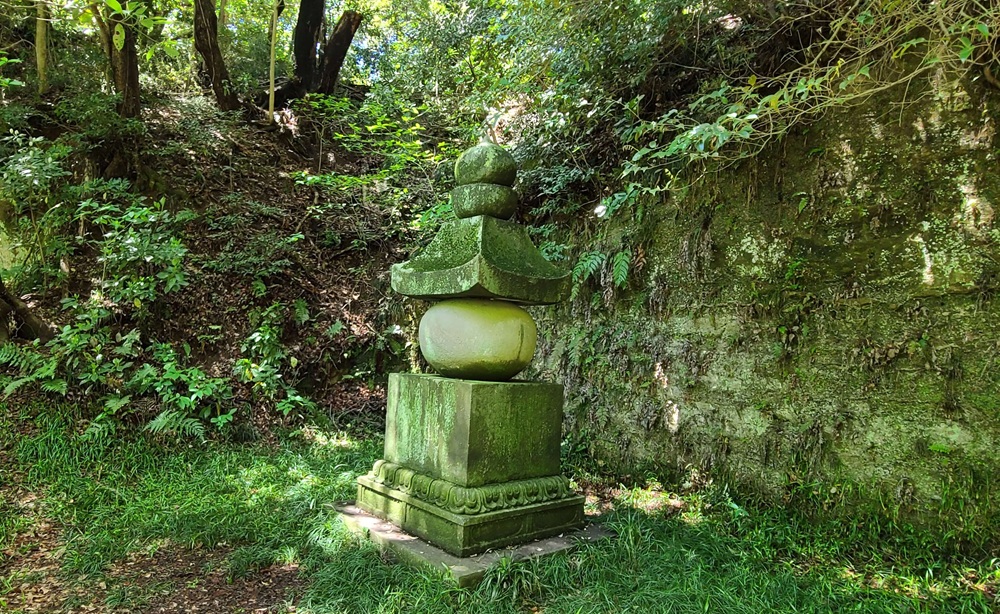
Kakuken’s Gorintō
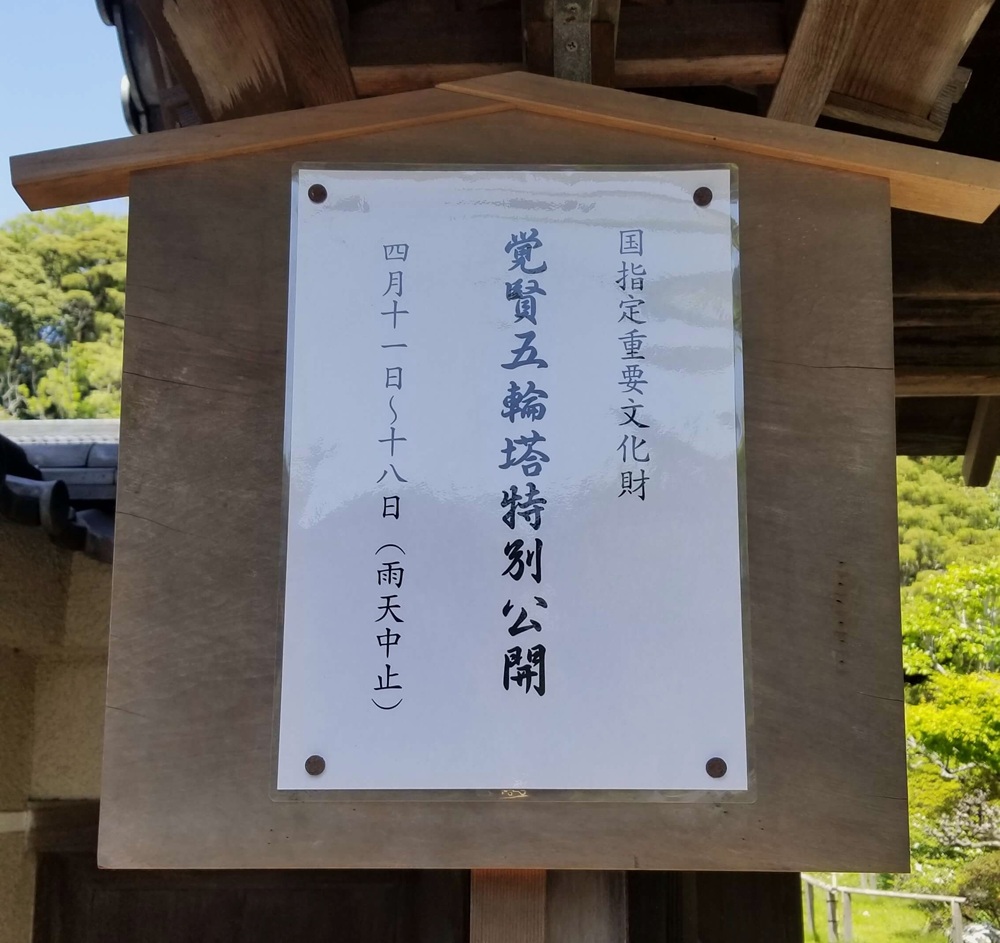
To visit Kakuken’s Gorintō, you should first pay a visit to Jōkōmyō-ji Temple.As long as you go during the temple’s opening hours on a day when it is open to the public, there should be no problem.
Proceed alongside the temple’s guest hall, where you will find a staircase. Climbing these steps leads you to the entrance of the paid viewing area.
After paying the admission fee, continue further inside. At the Buddha Hall and the Kannon Hall, you can pay your respects to the Buddhist statues, and you will also receive a careful and detailed explanation free of charge.
After that, continue climbing the mountain behind Jōkōmyō-ji Temple. From behind the Hōkyōintō pagoda of Reizei Tamesuke, enter the mountain path.
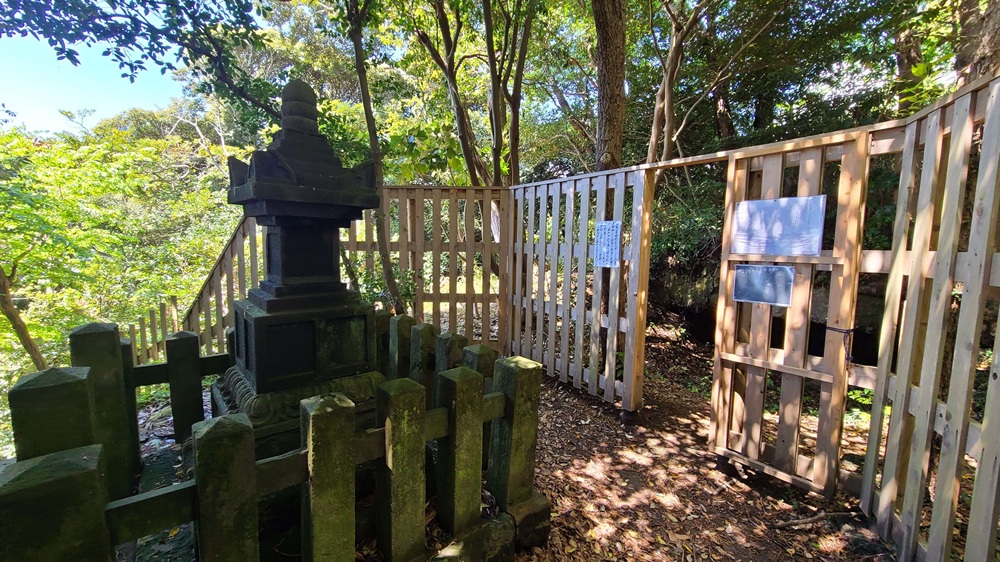
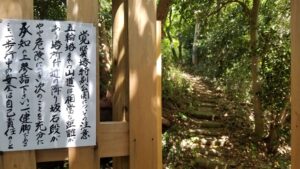
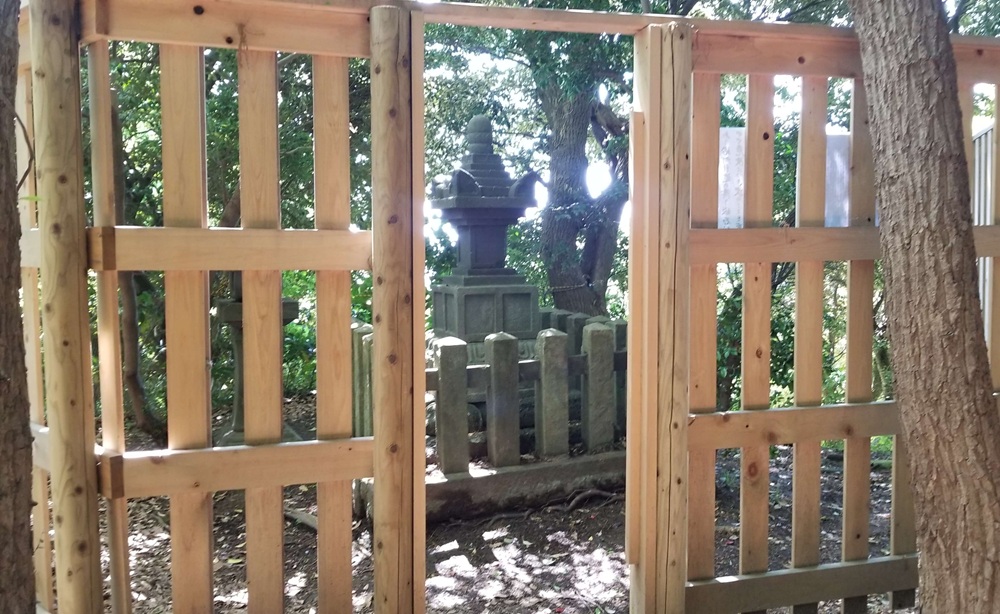
This area is not normally open to the public, but it is specially opened only once a year during this season.
After about a five- to six-minute walk up and down the mountain path, the Kakuken Pagoda finally comes into view through the trees.
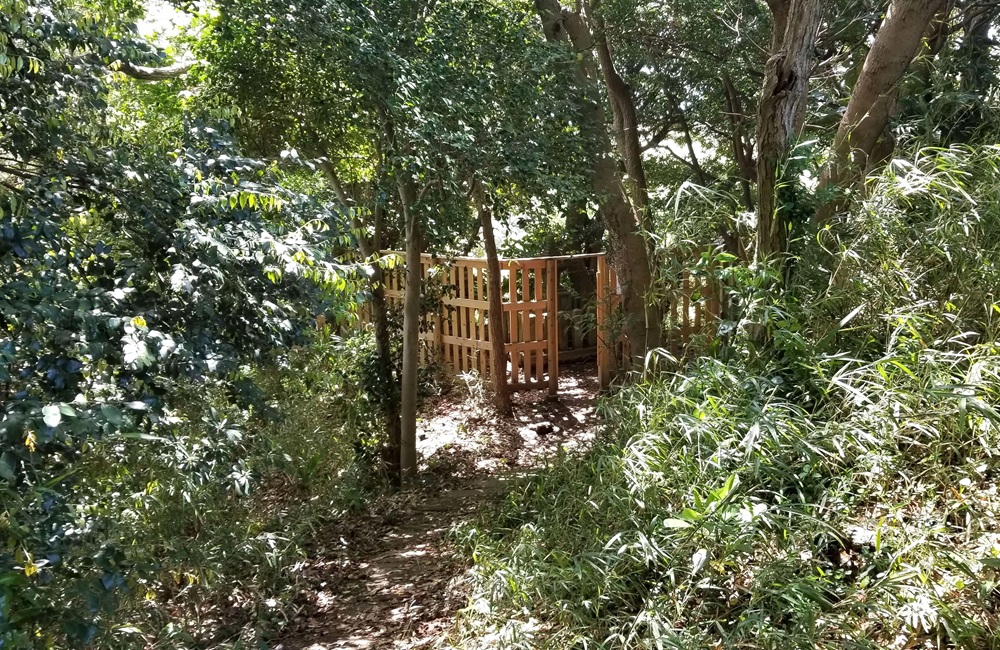
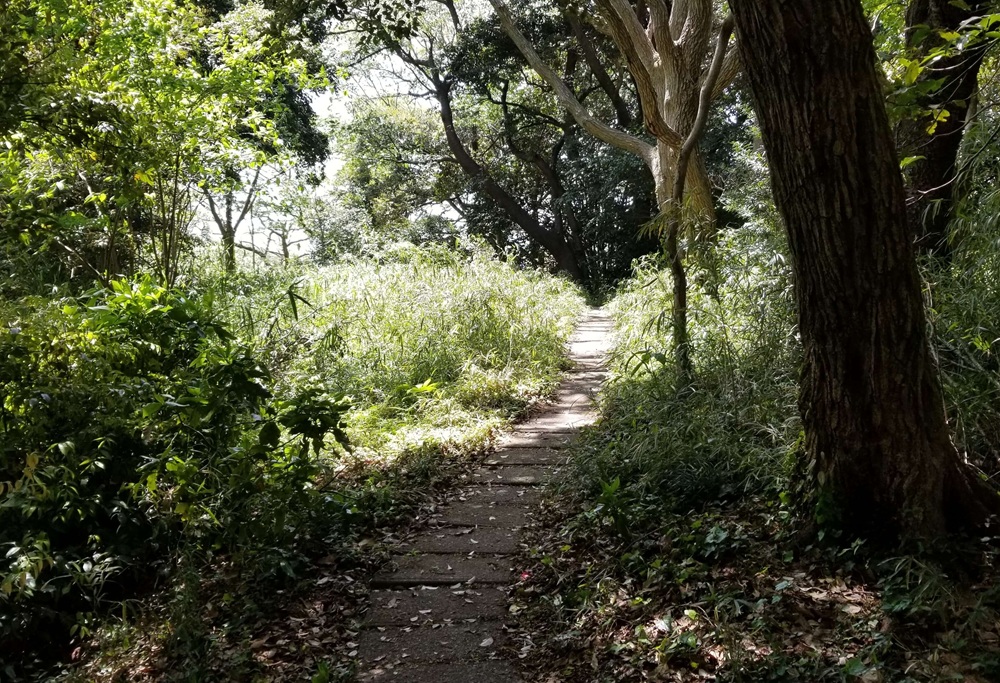
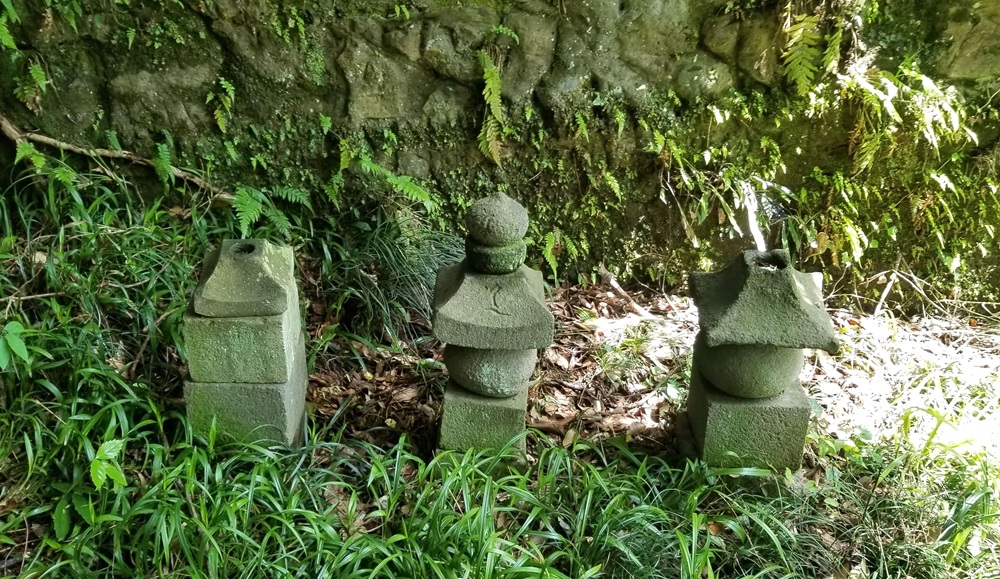
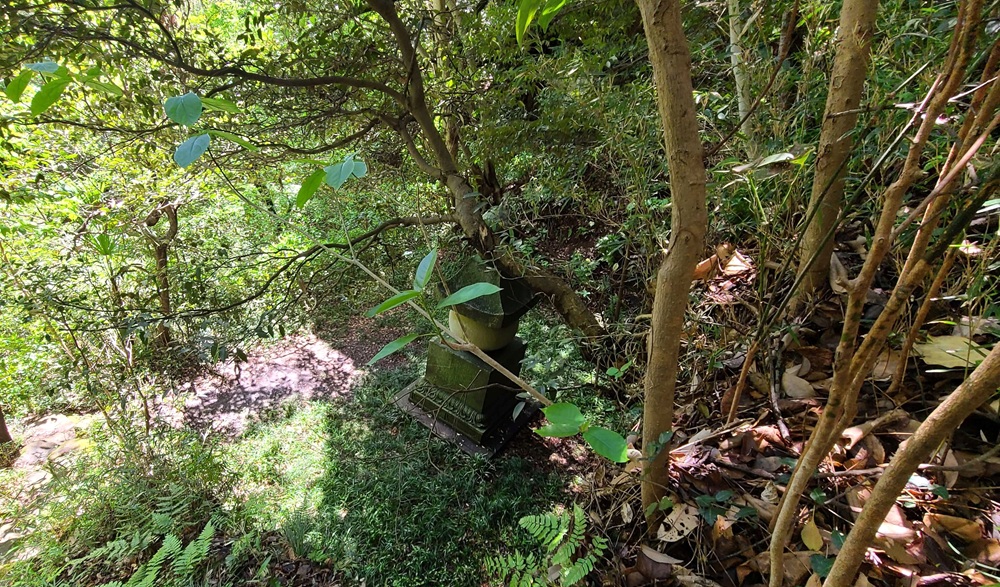
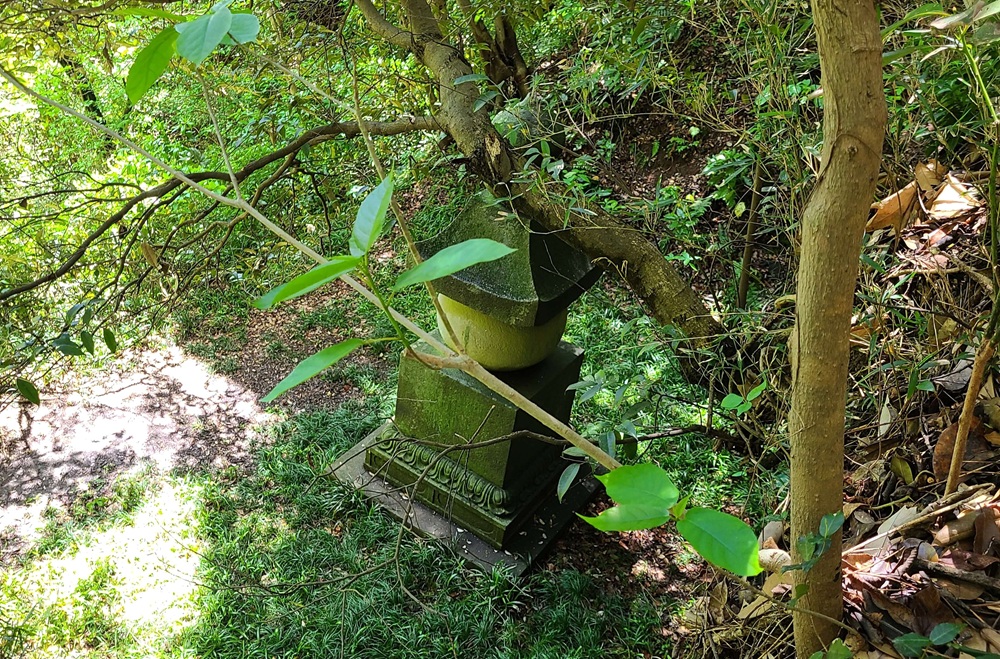
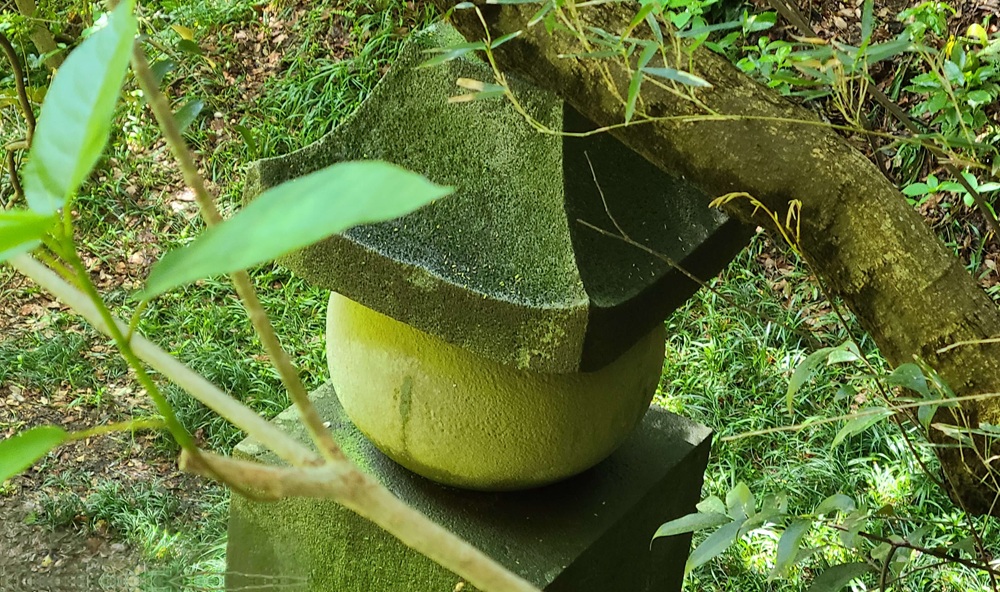
It is said to stand 328.1 centimeters tall, and while its size may be apparent even in photographs, standing before it in person is overwhelming beyond imagination.
Its powerful presence, rising quietly in the stillness of the mountains, is truly breathtaking.
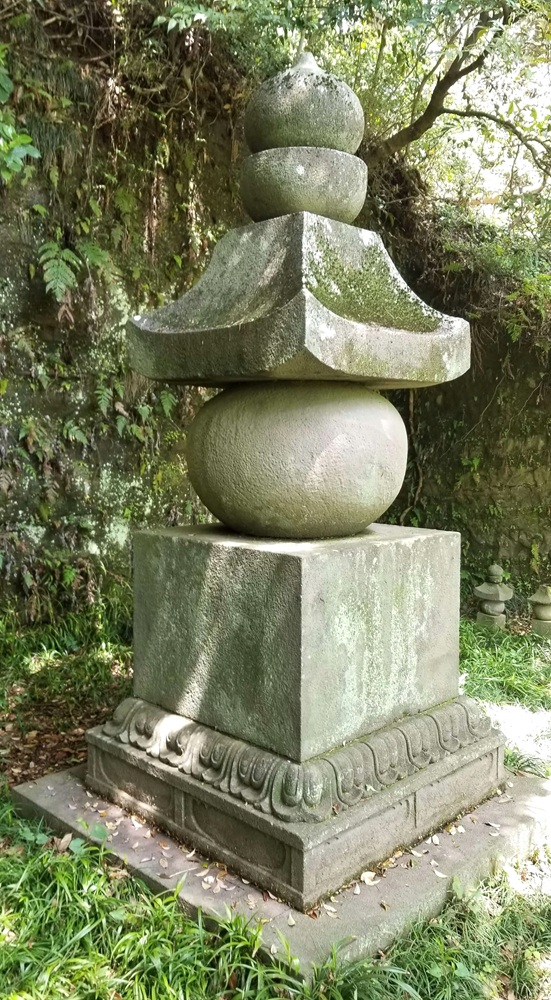
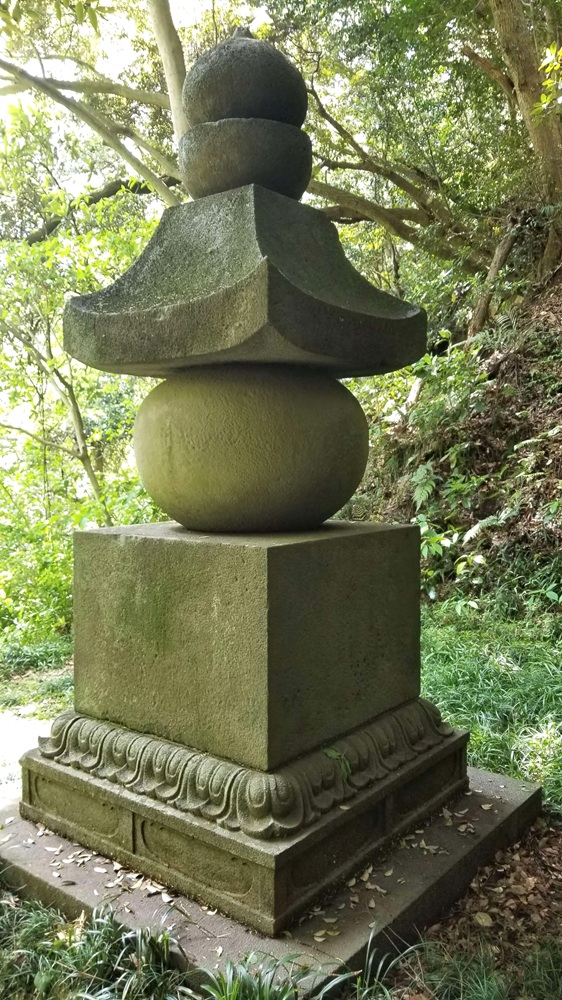
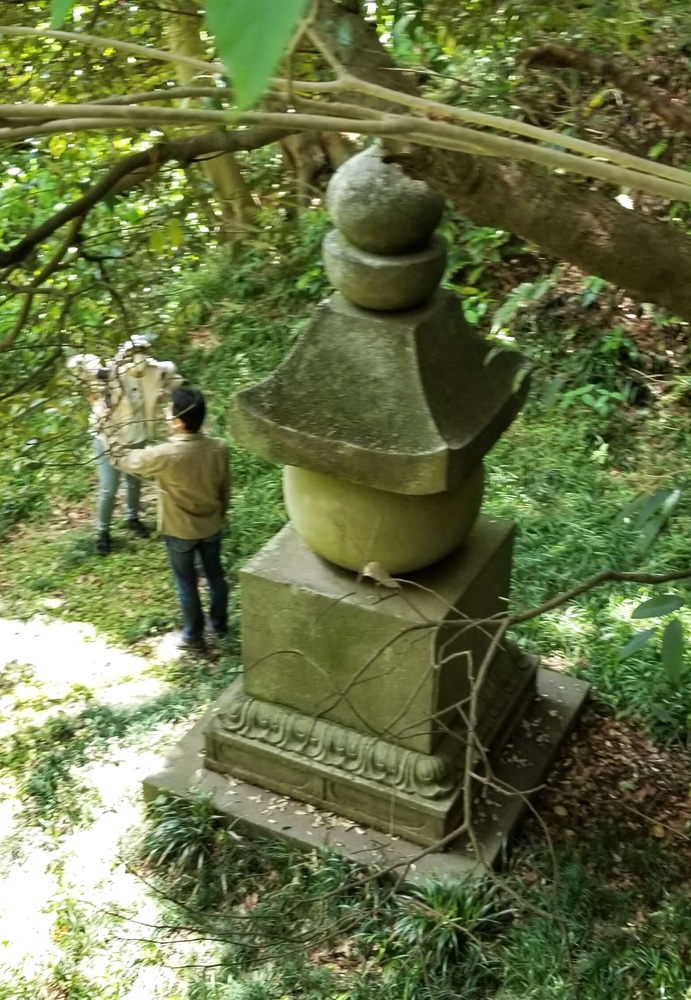
This Kakuken Pagoda is said to be the second-largest gorintō, following the Ninshō Pagoda at Gokuraku-ji Temple.
Unfortunately, photography is not permitted at the Ninshō Pagoda, so it cannot be shown here in photos.
However, it is open to the public on April 7th and 8th, and I highly recommend visiting in person to experience its scale and unique atmosphere firsthand.
Tahoji
Tahoji Temple was formerly called “Tahoji-yatsu” (Tahoji Valley), and its mountain name was 「扇ヶ谷山」, pronounced Senkokusan.
The “Shinpen Kamakurashi” (New Edition of Kamakura History) states, “There is a place called Tahoji-yatsu, but no temple,” and lists only a stone tower without any mention of a temple.
This stone tower is now called Kakuken Tower.Tahoji Temple was located in an area centered around Tahoji-dani in Kamakura.
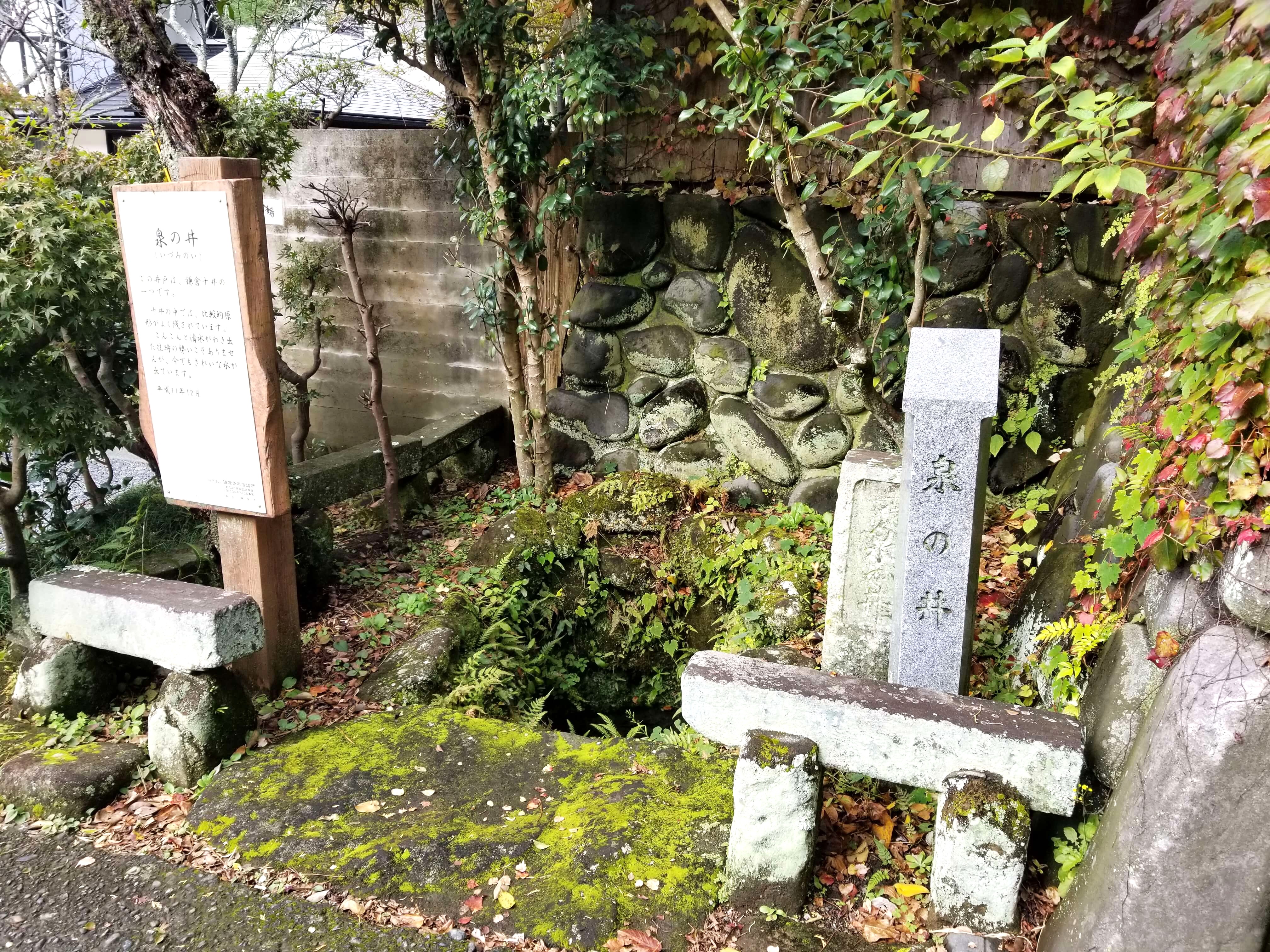
The temple no longer exists, but the temple grounds are thought to have extended south to the area near Izumi-no-I, east to a city road leading deep into Izumigadani, and north to the valley deep within Izumigadani.
The western boundary is unknown.The founding date and duration of Tahoji Temple are unknown, but it is certain that Priest Ninsho served as the chief priest of Tahoji Temple before moving to Gokurakuji Temple.
Gokurakuji Temple is said to have been founded in 1267 at Ninsho’s invitation, so Tahoji Temple is thought to have been founded earlier than that.There are also records of a major fire that occurred on November 6th, 1310 (Enkyo 3), and it is said that Junnin, the abbot of Taho-ji Temple, succeeded Gokuraku-ji Temple in 1315.
These facts suggest that Taho-ji Temple existed at least until around this time.
However, by the time the Edo period began and the New Edition of Kamakura-shi was published in 1685, Taho-ji Temple had already disappeared, with only its ruins remaining.
Kakuken, a Buddhist monk
Kakuken (dates unknown – 1306) was a Ritsu-sect Buddhist monk active in the late Kamakura period. He served as the head priest of Taho-ji Temple.
Virtually nothing is known about his life or activities; his existence is known only from an inscription on a reliquary container, which reads:“Head priest Kakuken of Taho-ji.
These are his remains. Entered nirvana on the eighth day of the second month, Kagen 4 (1306).”In 1306, Jun’nin succeeded Kakuken as head priest of Taho-ji. Jun’nin later became head priest of Gokuraku-ji in 1315. At the time, it appears that becoming head priest of Gokuraku-ji was a typical career path following service as head priest of Taho-ji.
👉 For information on the public opening of the Ninshō Pagoda, please check out this blog!「Gokuraku-ji’s special viewing is amazing and great!」
I recommend 『No-Nonsense Buddhism for Beginners: Clear Answers to Burning Questions about Core Buddhist Teachings』 No-nonsense Buddhism for Beginners, author Noah Rasheta, renowned Buddhist teacher and host of the popular podcast “Secular Buddhism,” offers an easy-to-understand introduction to Buddhist teachings, covering the fundamentals of Buddhism and how to apply Buddhist philosophy to everyday life.
The item was purchased through your Amazon website.
Gorintō & Hōkyōintō
A gorintō (five-ring pagoda) originated from the Indian concept of the Five Great Elements—earth, water, fire, wind, and space.
These five elements are represented as five stacked sections, forming the characteristic shape of the stone pagoda.
In Japan, gorintō were primarily erected as memorial towers from the Heian through the Kamakura periods, and they are especially numerous in the Kantō region during the Kamakura period.
At first, they were not intended for commoners; most were built for people of high social status, such as members of the warrior class.
After their introduction to Japan, gorintō were used mainly as graves for the upper classes, but during the Edo period they gradually became widespread as ordinary graves for the general population.
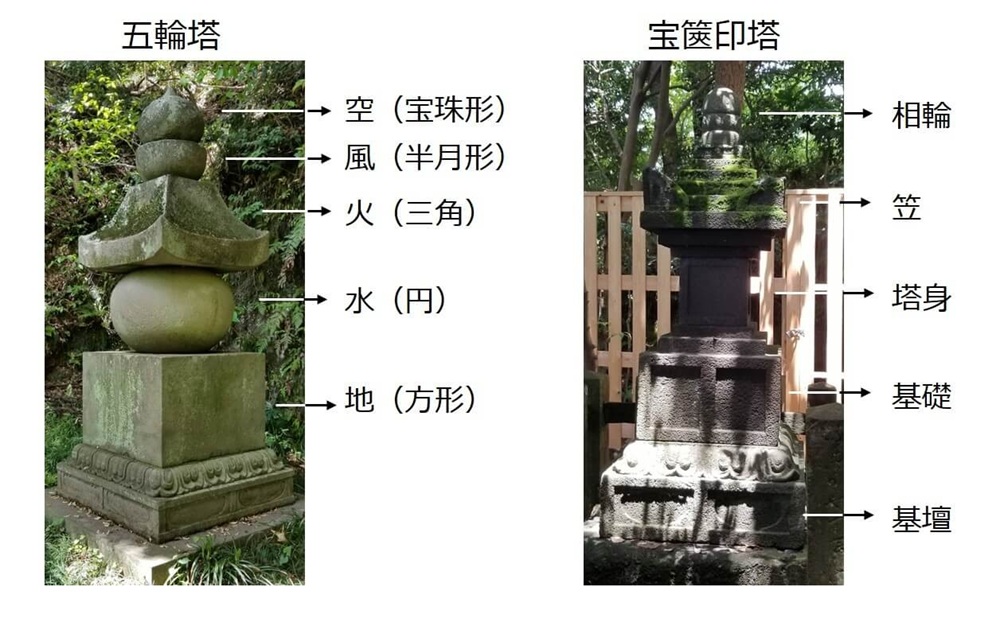
A Hōkyōintō pagoda is said to be modeled after a sotoba (wooden memorial tablet) and can be broadly classified into two types: the Kantō style and the Kansai style.
The Kantō style is characterized by its decorative design. The shaft of the pagoda is framed with molded borders, the sides of the base are divided into two tiers by similar framing, and an inverted lotus pedestal is placed beneath the base.
In contrast, the Kansai style lacks such framing on both the shaft and the base, resulting in a simple and restrained form.
This style is regarded as the standard type and is widely distributed throughout Japan.
The Hōkyōintō pagoda of Reizei Tamesuke seen in the photograph can be identified as being in the Kantō style based on these characteristics.
Access
To reach the Kakuken Pagoda, you approach it from the rear of Jōkōmyō-ji Temple, so let’s first head to Jōkōmyō-ji.
Jōkōmyō-ji Temple
2-12-1 Ōgigayatsu, Kamakura
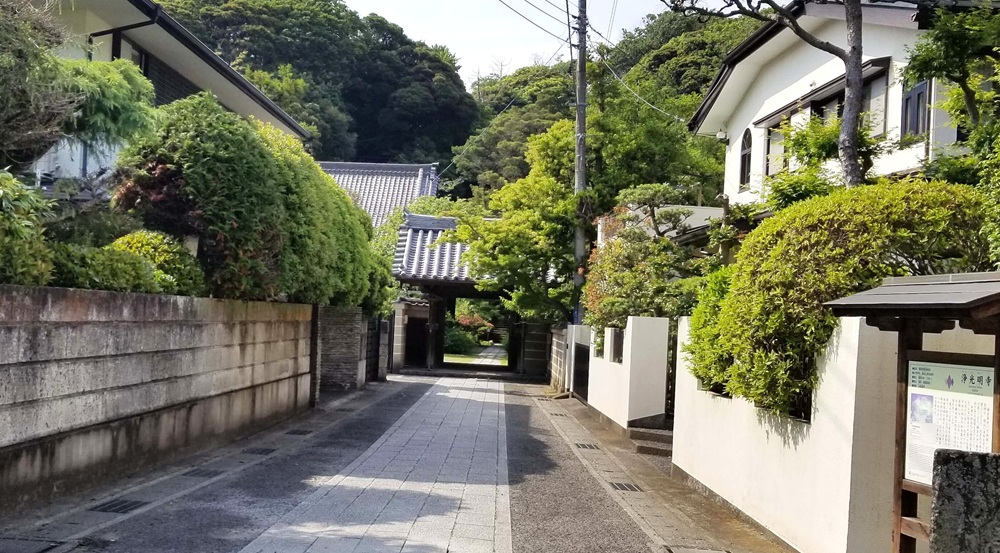
Origin: This is the bodaiji (family temple) of the Akahashi branch of the Hōjō clan, founded in 1251 (Kenchō 3) when Nagatoki Hōjō invited Priest Shina’a (Shinseikokushi) as its founding abbot.
After the fall of the Kamakura shogunate, the temple is also known as a place where Ashikaga Takauji temporarily stayed.
It continued to receive strong patronage from the Ashikaga family afterward.
On the hillside behind the temple lies the grave of Reizei Tamesuke, a poet, who was the child of Abutsu-ni and the ancestor of the Reizei family.
コメント