
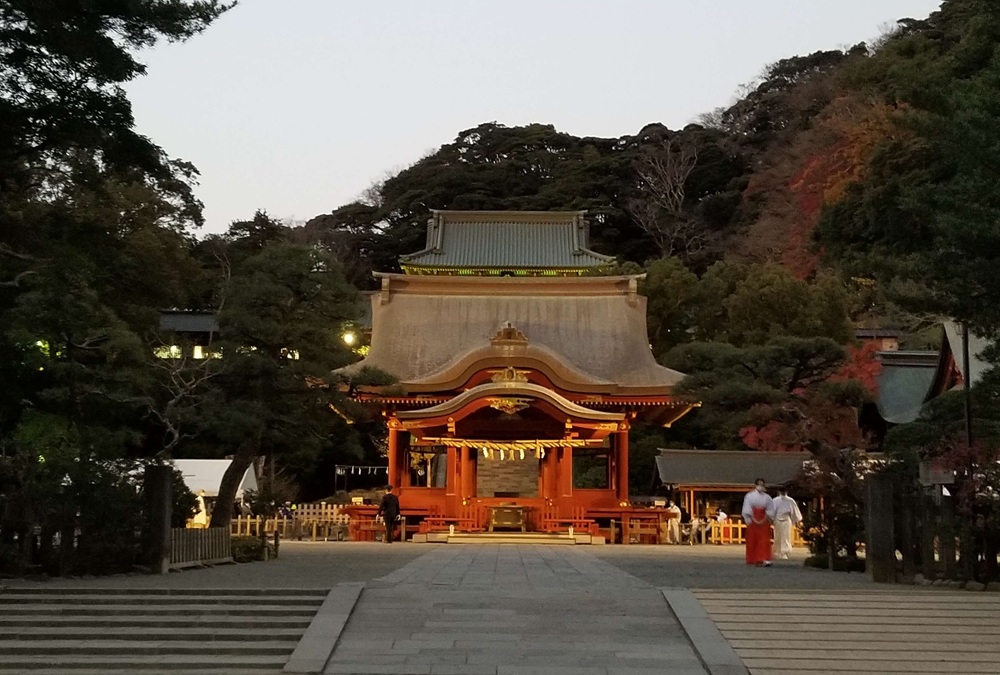
The Gochinza Memorial Festival is an amazing event that creates a magical and atmospheric vibe in Kamakura at night.
Gochinza Festival
Tsurugaoka Hachimangu was founded by MInamoto no Yoritomo in 1180, but destroyed by fire in 1191. Yoritomo soon succeeded in building a more magnificent shrine.
When the new shrine was completed, Yoritomo invited court musicians to dedicate the Kagura of the Imperial Court to the Hachiman Kami.
Today, the shrine Foundation Day is celebrated on 16th December, a date calculated from the original lunar calendar.
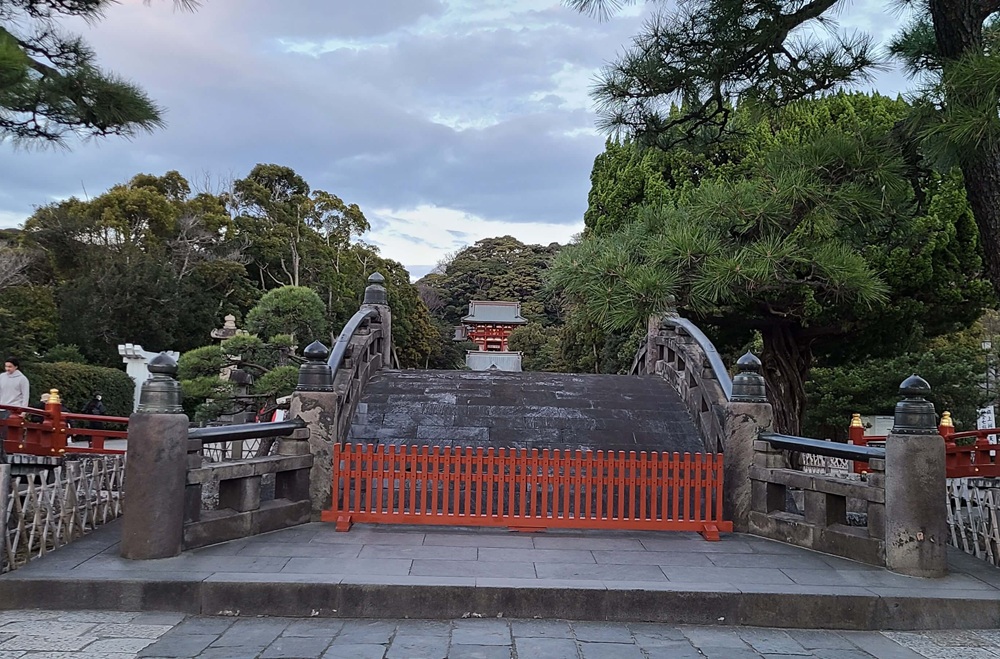
It’s nice how everyone’s handwriting has its own unique character depending on who writes it.
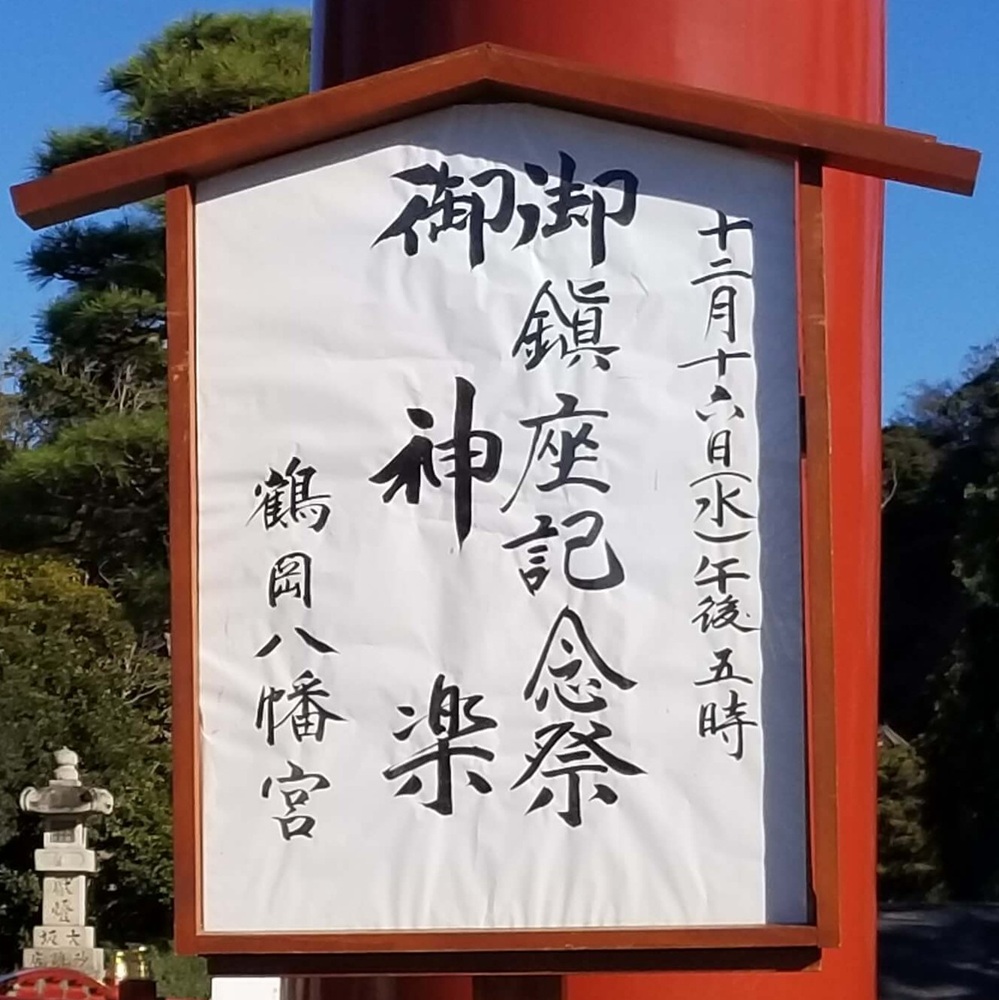
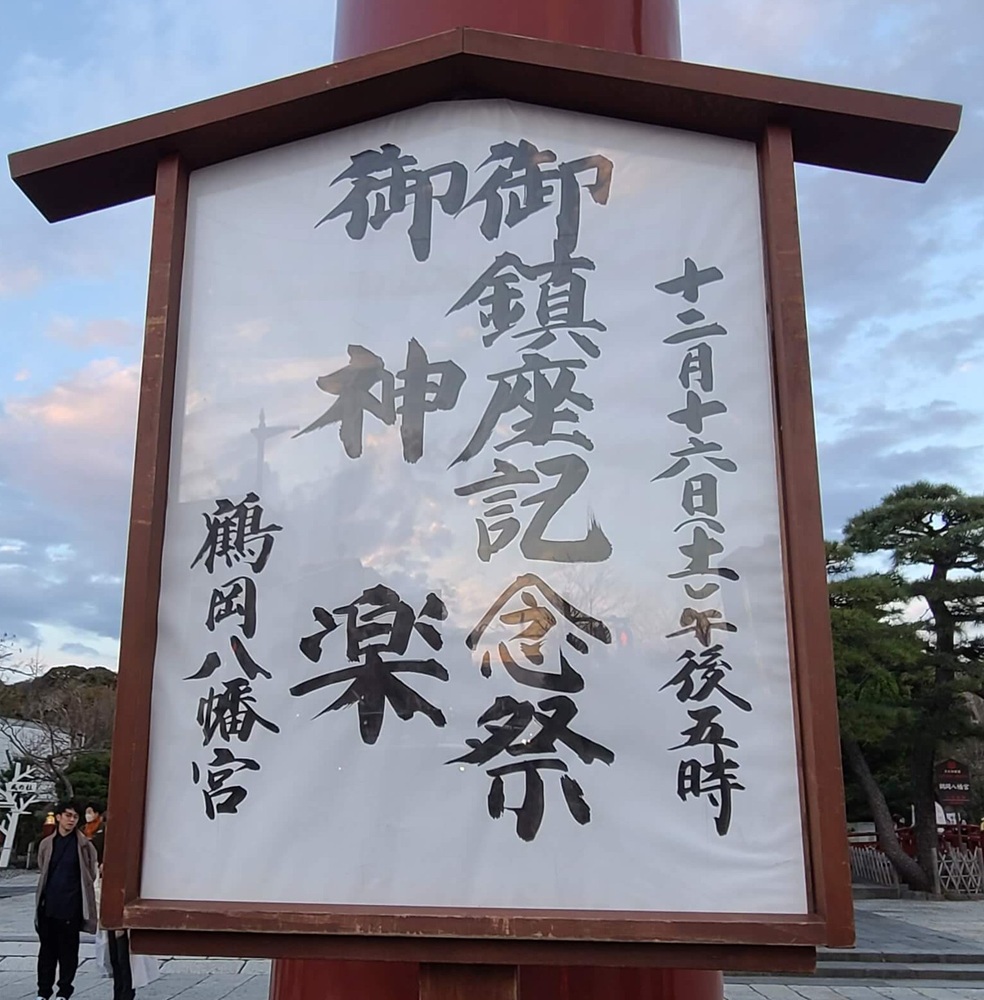
Event Schedule
At the festival, four shrine maidens first perform an elegant dance to the music of ‘Miyabito no Kyoku.’
This is followed by the offering of ‘Ninchō no Mai,’ performed by Shinto priests.
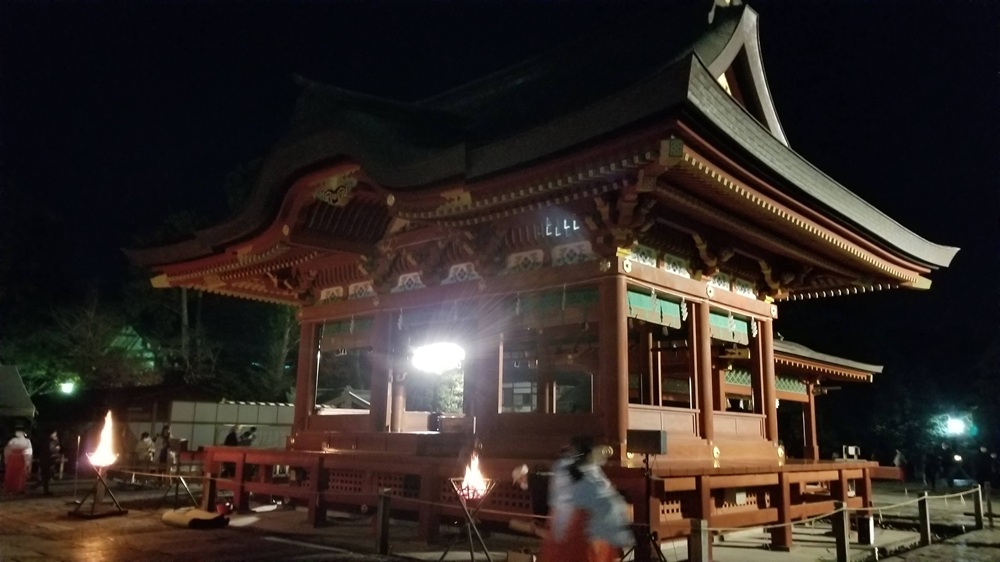
No modern lighting such as spotlights is used; the entire ceremony proceeds illuminated only by the light of bonfires, creating a truly mystical atmosphere.
It feels as though you have slipped back in time 800 years, and a very special moment unfolds.
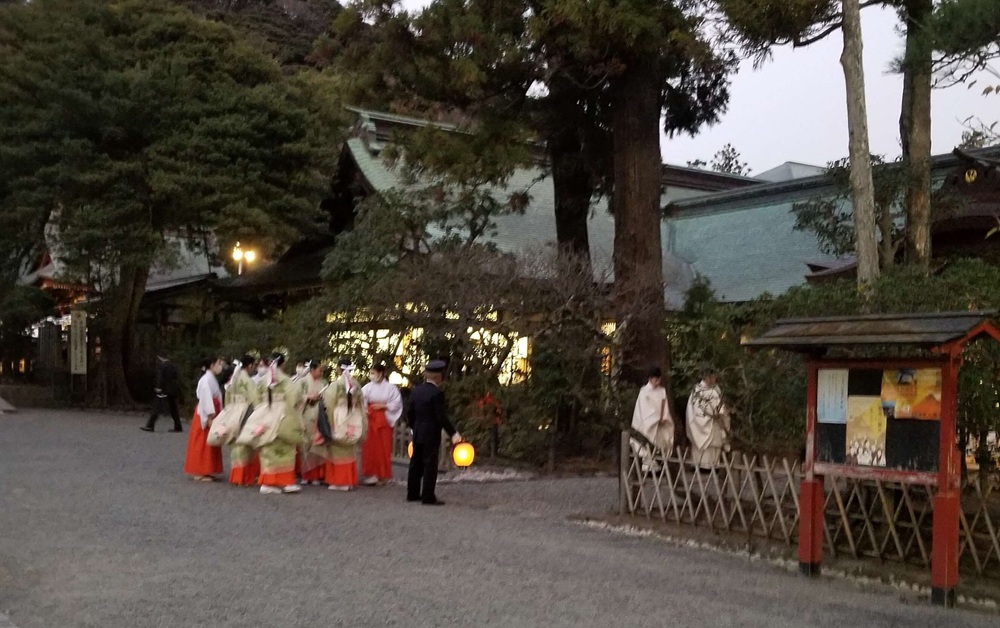
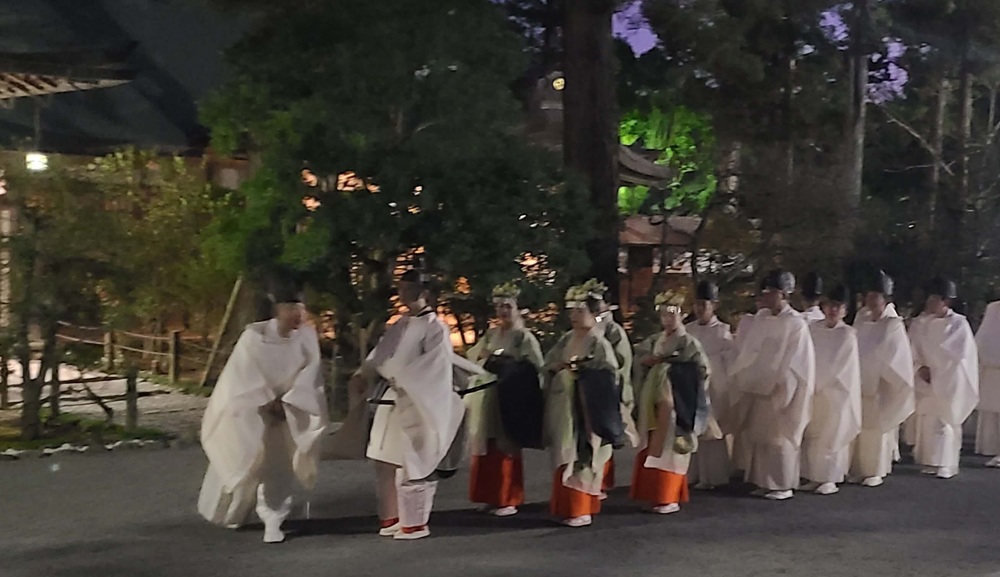
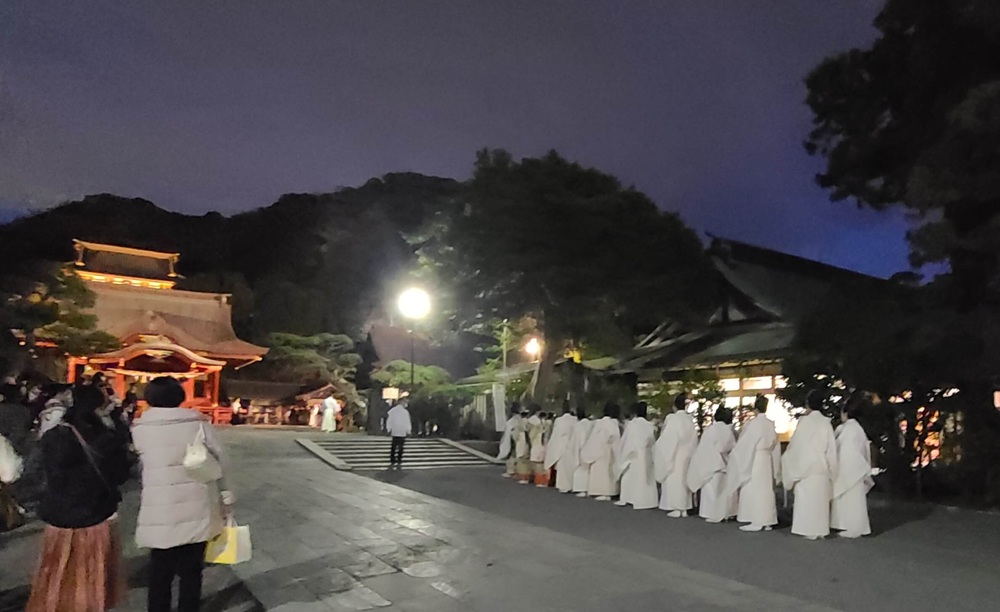
While the sacred rites are being conducted in the main shrine building, preparations begin outside.
Bonfires are lit, and the priests who will be playing the musical instruments start getting into position.
As you can see in the photo below, back in 2020 it was still easy to get a good view from the front even around 5:20 p.m.
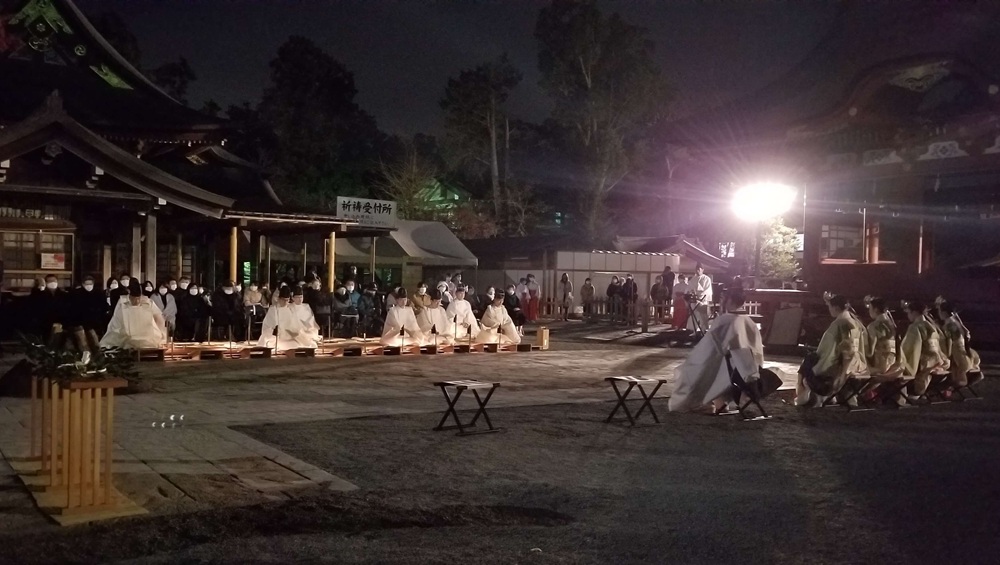
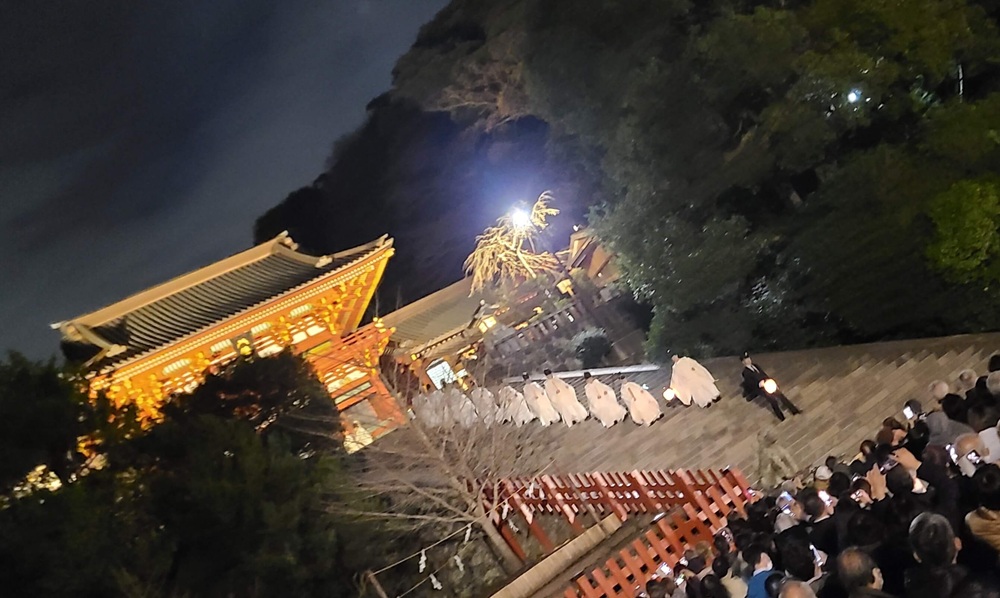
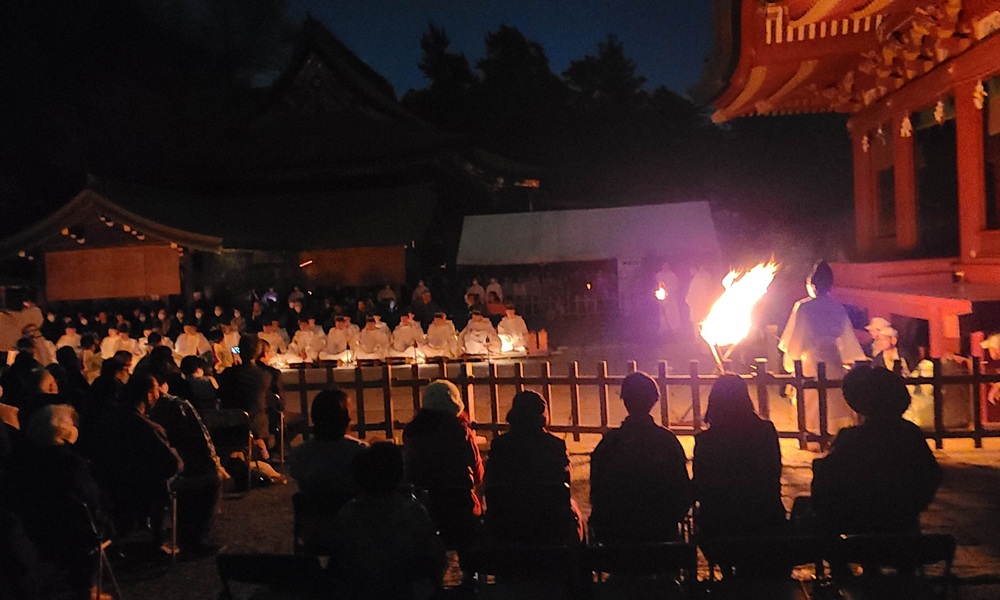
By 2023, however, there were already many people gathering shortly after 5:00 p.m. Viewing areas are designated, so if you want to watch from the very front, it’s best to arrive by 5:00 p.m.
The number of spectators seems to be increasing every year, so arriving even earlier might be safer.
That said, if you wait near the shrine office to watch the priests and shrine maidens come out, it may be difficult to secure a spot near the front.
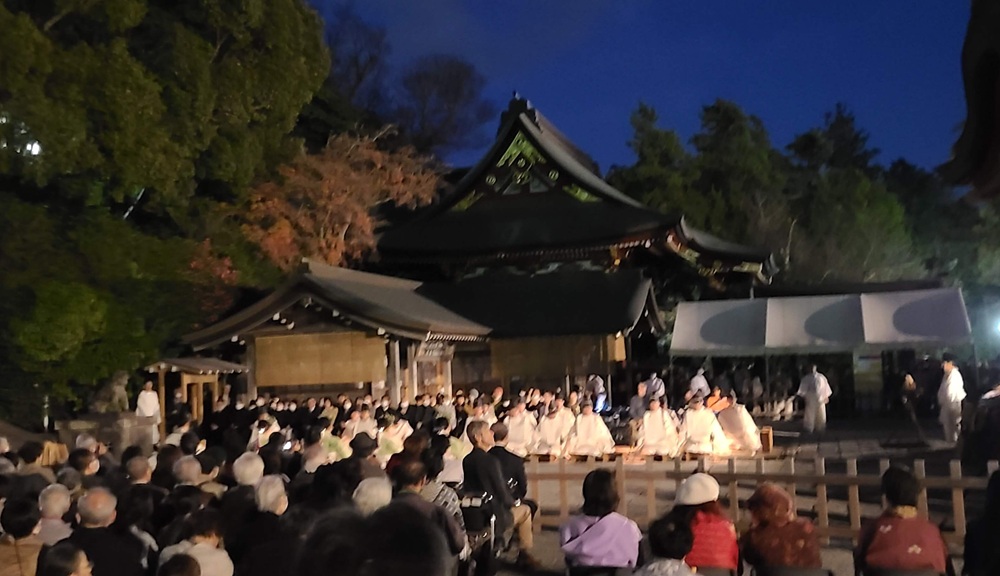
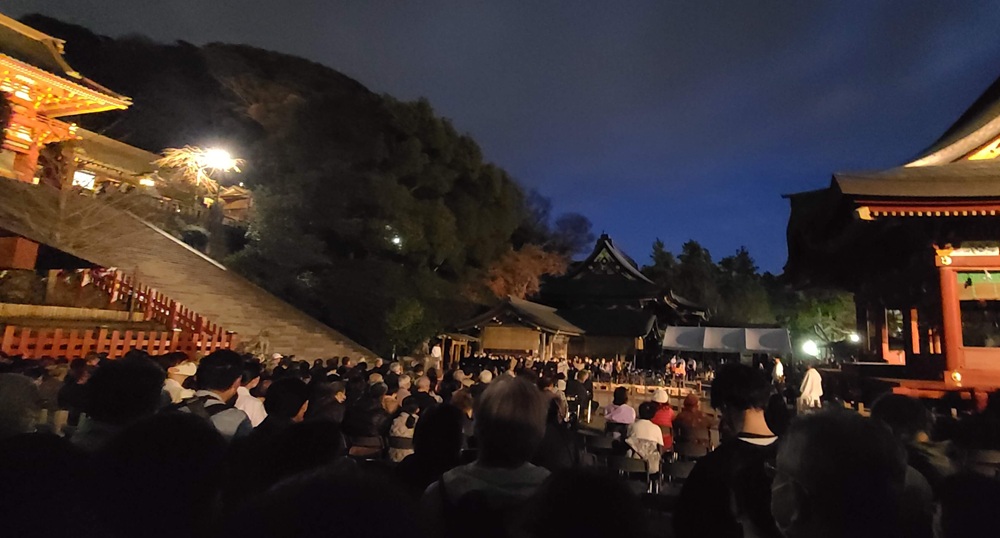
Seating that did not exist in 2020 had been set up by 2023. These seats are reserved for people associated with Tsurugaoka Hachimangū and members of the Enojyu no Kai, and are not open to the general public—unfortunately!
From around 5:10 p.m., the musicians who perform gagaku begin taking their seats, which is interesting to watch in itself. At 5:16 p.m., the sacred rites conclude, and the priests come down.
While the ritual is being held inside the main hall, preparations begin outside.
Bonfires are lit, and the musicians take their positions.
As shown in the photo below, in 2020 it was still possible to get a close view around 5:20 p.m.
However, in 2023, the area was already crowded by 5:00 p.m. Since viewing spots are designated, it’s best to arrive by 5:00 p.m.
if you want to be in the front row. (Given that more people attend each year, arriving even earlier is recommended.)
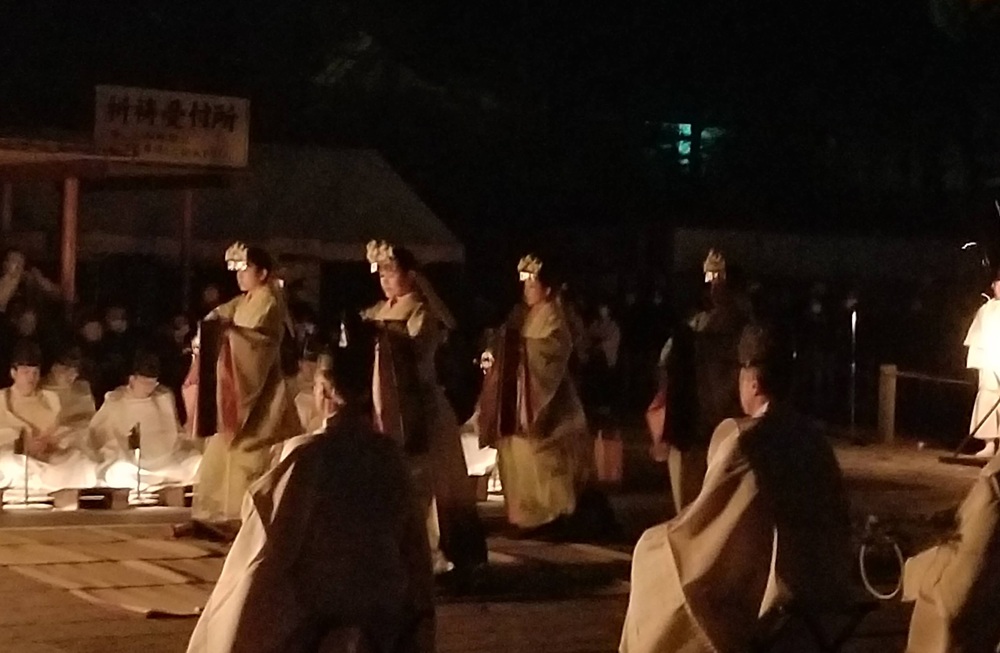
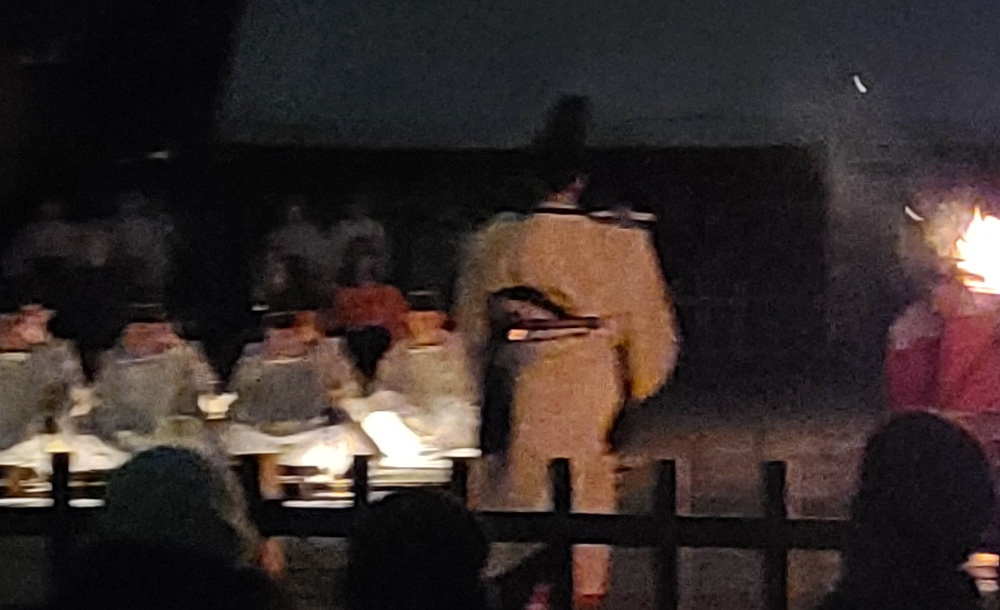
There were no seats available in 2020, but in 2023, seating was provided.
For information about seating availability in 2025, please check the official website of Tsurugaoka Hachimangu Shrine.
Next, please check out the video (the one from 2020, since it was filmed from a closer distance). Sorry the images aren’t very clear.
It usually ends around 6:15 p.m.
The weather varies from year to year, but since it’s December, it can be quite cold. Standing for over an hour in the cold can be pretty tiring, so don’t forget to dress warmly.
Also, regarding photography, flash is strictly prohibited. Every year, a few people forget to turn off their flash (mostly on their phones) and end up taking photos, which draws some very disapproving looks from those around them—so please be careful.
Access
From Kamakura Station West Exit, we recommend either walking through Komachi Street or going straight to Wakamiya Ōji and passing through Dankazura.
It takes about 10 minutes on foot.
Opening Hours: Year-round, 6:00 a.m. – 8:00 p.m.
Address: 2-1-31 Yukinoshita, Kamakura, Kanagawa Prefecture, Japan
Click here if you want to see other blog posts. 👉 Blog
コメント