
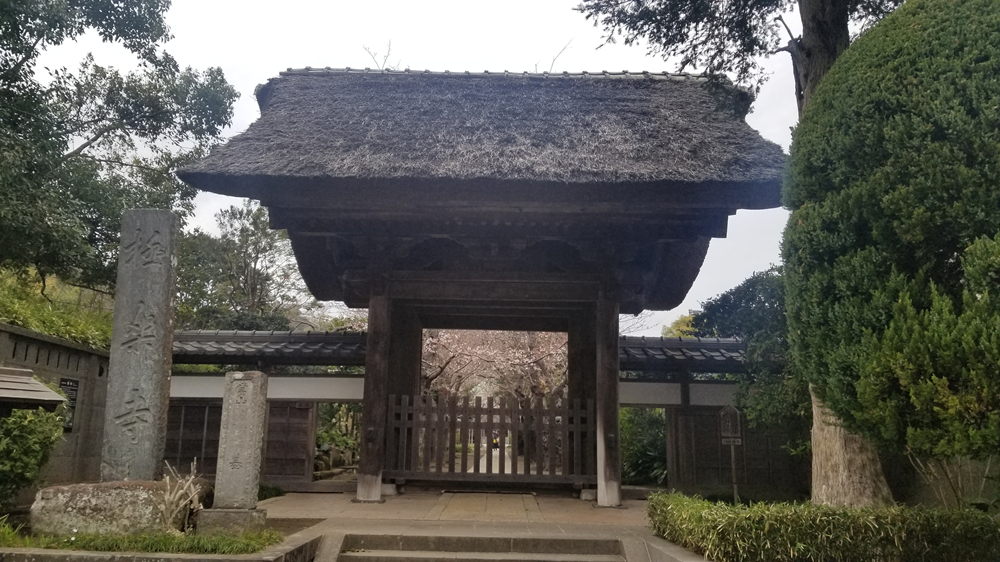
Event Schedule
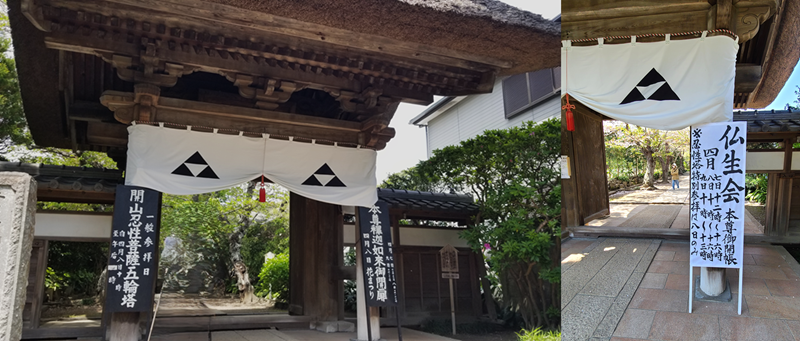
Part①
You can view and pay respects to the Seiryōji-style Shaka Nyorai, the principal hidden Buddha of Gokurakuji Temple, which will be specially opened to the public on April 7 and 8.
The statue is displayed together with the Ten Great Disciples and has been passed down since the temple’s founding.
[Opening of the Principal Image & Main Hall Worship]
April 7: 11:00 a.m. – 4:00 p.m.
April 8: 10:00 a.m. – 4:00 p.m.
The principal standing statue of Shaka Nyorai, enshrined in the Tenpōrin-den and handed down since the founding of Gokurakuji Temple (designated an Important Cultural Property of Japan), will be specially opened to the public.
Visitors may also worship the statues of Ninshō Bosatsu and Kōshō Bosatsu in the Main Hall.
Incense offering fee required: ¥1,000
Reception opens from 10:00 a.m. on both days.
Part②
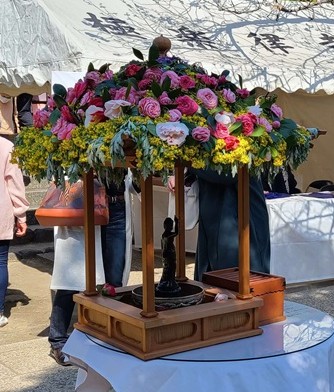
April 8 is celebrated as the birthday of Shakyamuni Buddha and is commonly called Hana Matsuri or Gōtan-e.
During the festival, rituals such as the Kanbutsu-e take place, where sweet tea is poured over the statue of the Infant Buddha in celebration of his birth.
[Hanamidō (Kanbutsu-e / Hana Matsuri)]
April 8: 10:00 a.m. – 4:00 p.m.
According to Buddhist tradition, when Shakyamuni Buddha was born, dragons descended from the heavens and bathed him with fragrant water (Makakatsu-kyō).
Based on this legend, a Buddhist ceremony is held every year on April 8, during which sweet tea (amacha) is poured over a statue of the Infant Buddha.
Please join in the celebration by pouring sweet tea over the Infant Buddha enshrined in the beautifully flower-decorated Hanamidō.
[Serving of Sweet Tea (Amacha)]
April 8: 10:00 a.m. – around 3:00 p.m. (while supplies last)
It is said that when Shakyamuni Buddha was born, the heavens celebrated by sending down a rain of sweet dew. In commemoration of this legend, sweet tea (amacha) is offered to visitors.
You can find information about Kamakura’s Hana Matsuri on this blog.
👉2026.4.8 Hanamatsuri is the Great day that Buddha was born.


【PR】Capture Your Japan Memories Instantly!
Make your trip to Japan even more memorable with a Japanese instant camera (like a mini “Cheki”). These cameras are perfect for creating fun keepsakes on the spot.
Use it to snap travel memories, party photos, or special moments with friends and family. They’re especially great when combined with Japanese cultural experiences, like wearing a kimono, participating in a festival, or visiting temples and shrines.
Take home your instant photos as unique souvenirs—you’ll treasure them long after your trip!


The item was purchased through your Amazon website.

Part③
Special Visit to the Mausoleum of Ninshō Bosatsu, Founder of Gokurakuji Temple Visitors can take a special tour of Ninshō’s Gorintō (five-ringed pagoda) located behind Gokurakuji Temple, said to be the largest in Kamakura. (Photography is not allowed.)
Photos can be viewed here. 👉 Cultural Heritage Online 「極楽寺境内・忍性墓」
[Special Visit to the Mausoleum of Ninshō Bosatsu]
April 7: 11:00 a.m. – 4:00 p.m.
April 8: 10:00 a.m. – 4:00 p.m.
Ninshō Bosatsu, the founder of Gokurakuji Temple, dedicated his life to helping the poor and the sick.
During this special visit, you can pay your respects at his mausoleum in the inner sanctuary, where his Gorintō (five-ringed pagoda), said to be the largest in Kamakura and an Important Cultural Property of Japan, still stands.
[Ceremony at the Mausoleum]
April 8: 1:00 p.m. – around 1:30 p.m.
A Buddhist service will be held in front of the Mausoleum of Ninshō Bosatsu, during which visitors are invited to join in chanting sutras together.
(In case of rain, the ceremony will take place in the Main Hall.)
Part④
There are also special lectures offered only on these days.
This year, advance registration is required for both days, so there is no need to line up in advance.
Please sign up using the form below:
https://forms.gle/WiVyVamYXSFuoPbFA
Lecture: “The Past and Future of Kamakura Buddhist Sculptors”
Guest Speaker: Kisei Okunishi
Date & Time: April 7th, 1:30 PM – around 2:30 PM
The Kamakura Busshi, a group of Buddhist sculptors who flourished from the Kamakura period to the Muromachi period, once reached the height of their artistic achievement.
In this lecture, we will explore the history of the Kamakura Busshi, whose lineage was once lost, and discuss an ambitious project for the future known as “Millennium Sculpture.”
Lecture: “Gokuraku-ji in the Early Modern and Modern Periods”
Guest Speaker: Ayako Tsubouchi (Kamakura National Treasure Museum)
Date & Time: April 8th, 1:30 PM – around 2:30 PM
The Kamakura National Treasure Museum and the Kamakura Museum of History and Culture have been conducting historical document research over the past two years.
In this lecture, drawing directly from their on-site findings, the speaker will discuss how the present landscape of Gokuraku-ji Temple was shaped, focusing on the period from the late Edo period to the modern era.
Advance registration required
Fee: 1,000 yen (Limited to 40 participants, first-come, first-served)
Part⑤
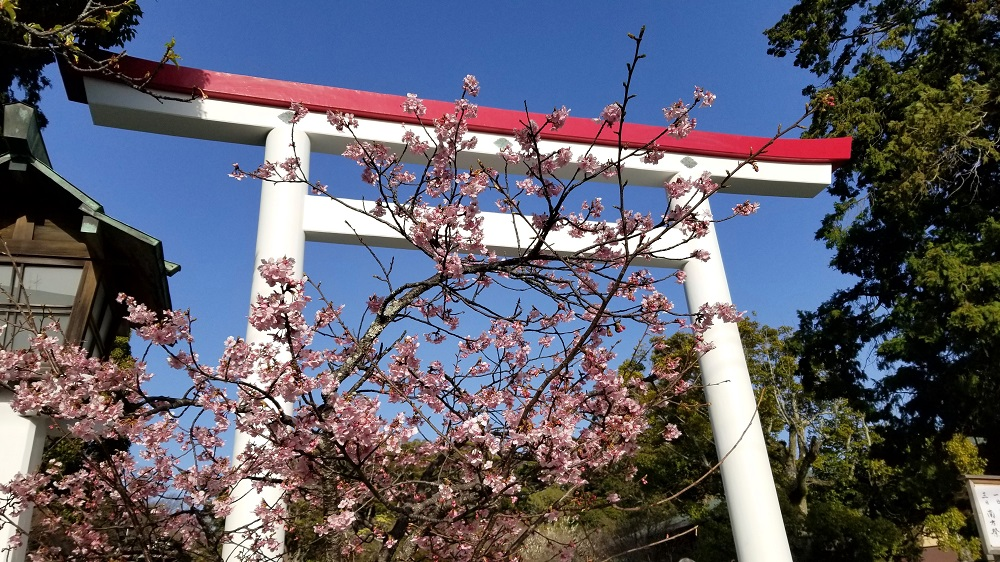
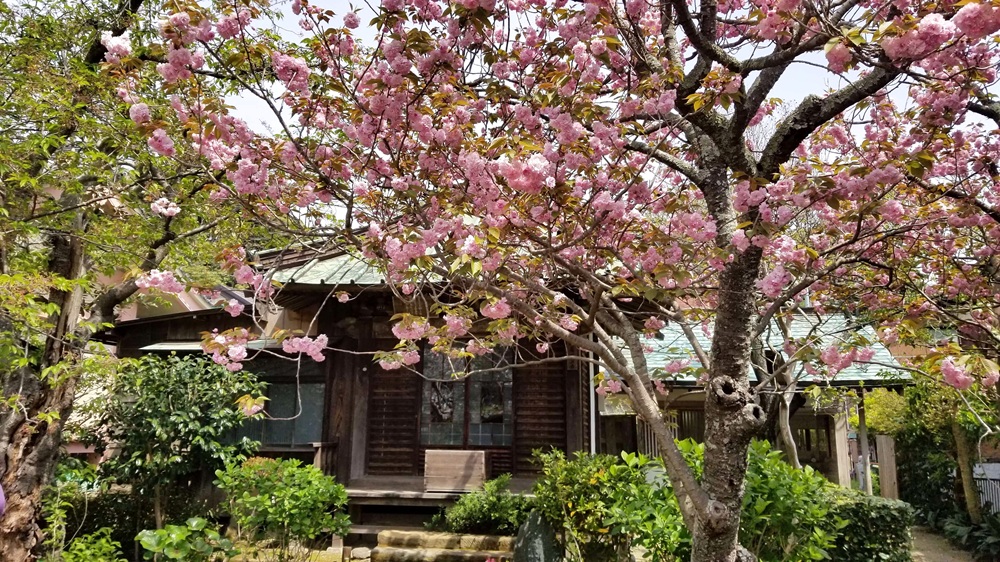
Depending on the year, the cherry blossoms can still be stunning at this time.

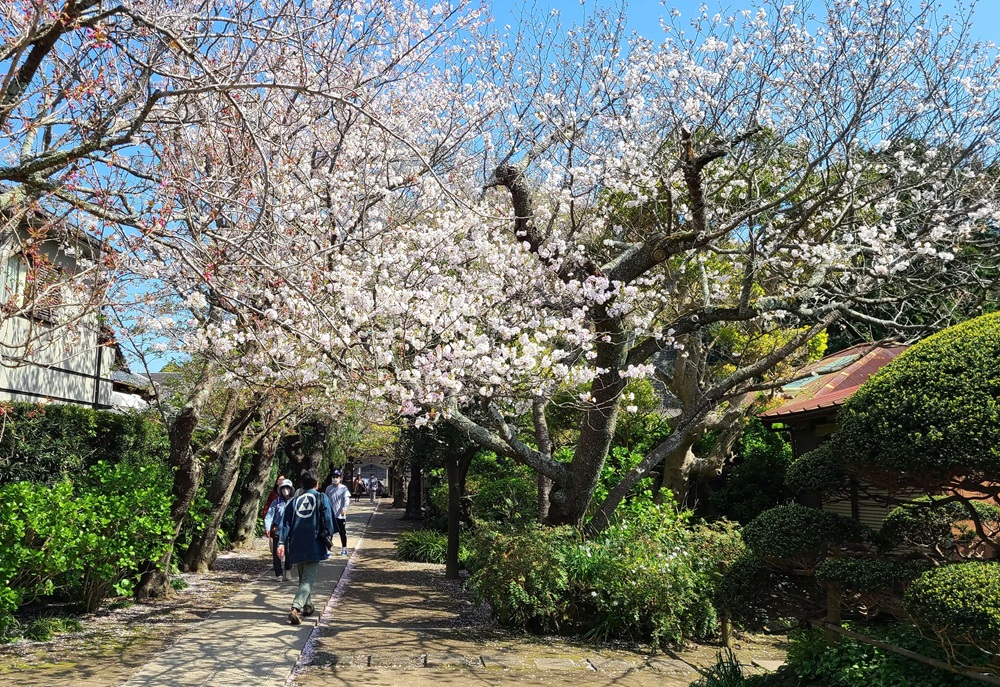
Gokurakuji Temple
Gokurakuji Temple (Shingon Ritsu Sect)
Founded by Ninshō, supported by Hōjō Shigetoki
Gokurakuji in Kamakura was one of the city’s major temples during the Kamakura period. At its peak, it had a large complex with seven main halls and extensive grounds—hard to imagine today’s peaceful temple site!
The temple also oversaw Wagae Island in Zaimokuza, one of Japan’s oldest port ruins, which was crucial for Kamakura’s trade. So Gokurakuji was not only a religious center but also an important part of the city’s infrastructure.

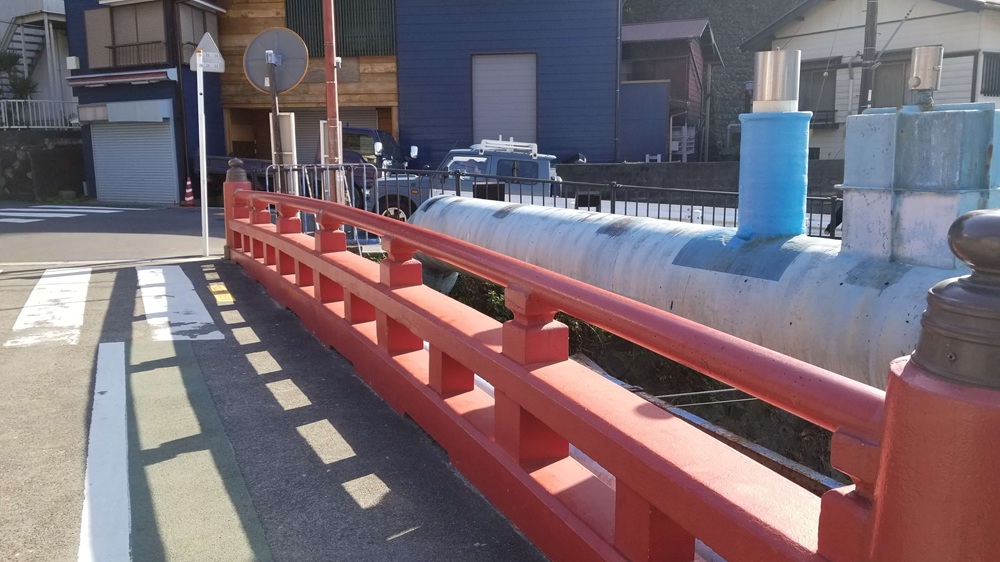
The temple’s fame grew thanks to the high priest Ninshō, who devoted himself to helping the sick, the poor, and society’s marginalized. His efforts were so remarkable that people called him the “Medicine Buddha” (Iō Nyorai).
Interestingly, Ninshō’s work was sharply criticized by Nichiren, who insisted that acts based on Shingon or Pure Land practices were not true Buddhist teachings. Their clash highlights the intellectual tensions of Kamakura Buddhism—talk about standing up to the powers of the day!

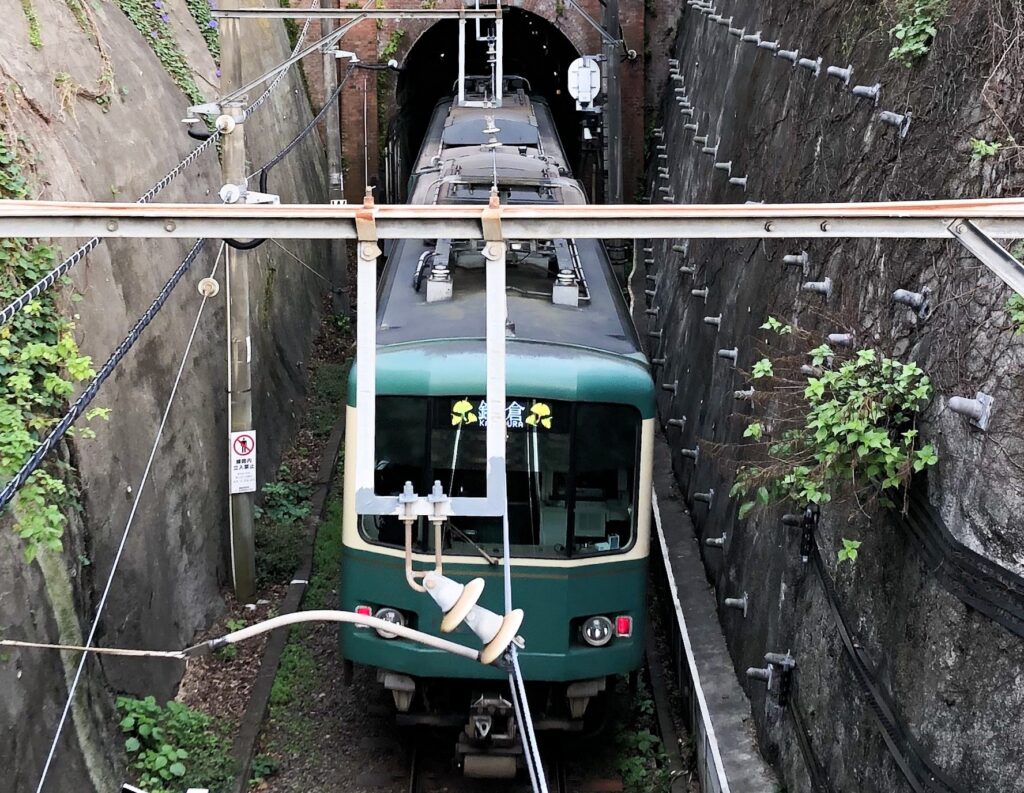
Today, you can still see the “ochausu”, a stone mill Ninshō used to grind tea leaves as medicine for the sick and poor. It’s a small but powerful reminder of how Gokurakuji was a place of practical compassion as well as spiritual devotion.
Ninshō
Ryōkanbō Ninshō (1217–1303)
Ninshō was born in 1217 in what is now Miyake Town, Nara Prefecture. He studied under Eisō at Saidaiji, learning Shingon esoteric Buddhism and monastic precepts, but he devoted much of his life to helping the poor and the sick. One famous story tells how he carried patients with leprosy on his back every day into town—a testament to his deep compassion and iron will.
After completing his training, Ninshō set out on a mission to the Kantō region in 1252 at age 36. He started his work from Sanmura-ji in Hitachi, and his reputation even reached the Kamakura shogunate.
Former regent Hōjō Tokiyori invited Eison to Kamakura, where he gave the Bodhisattva precepts to the Hōjō family and many retainers, building connections across the city. After Eison left, Ninshō moved to Kamakura and founded Gokurakuji Temple.
But here came a challenge: Nichiren. Nichiren harshly criticized all sects that did not follow the Lotus Sutra, warning that Japan would fall if temples like Kenchō-ji, Gokurakuji, and the Great Buddha Hall weren’t devoted to his teachings. He even sent Ninshō a challenge, urging him to become his follower.
During a drought, the shogunate asked Ninshō to perform rain prayers. Nichiren provocatively declared: “If it rains within seven days, you must become my disciple. If not, you must follow the Lotus Sutra.” Ninshō gathered many monks and prayed, but it didn’t rain. Nichiren criticized him for this, but an angry Ninshō, together with Ryōchū of the Jōdo sect, brought a complaint against Nichiren to the shogunate. Nichiren escaped execution at Ryūnoguchi but was exiled to Sado Island.
Nichiren didn’t hold back in his criticism. He called Nembutsu practices “the karma of endless hell,” Zen “the work of heavenly demons,” Shingon “a dangerous law for the country,” and Risshū “treasonous nonsense.” He even challenged Ninshō directly: “Elder Ninshō, quickly abandon your mocking ways and return to me, Nichiren!”
No wonder Ninshō got angry!
アクセス
Address:3-6-7 Gokurakuji, Kamakura city
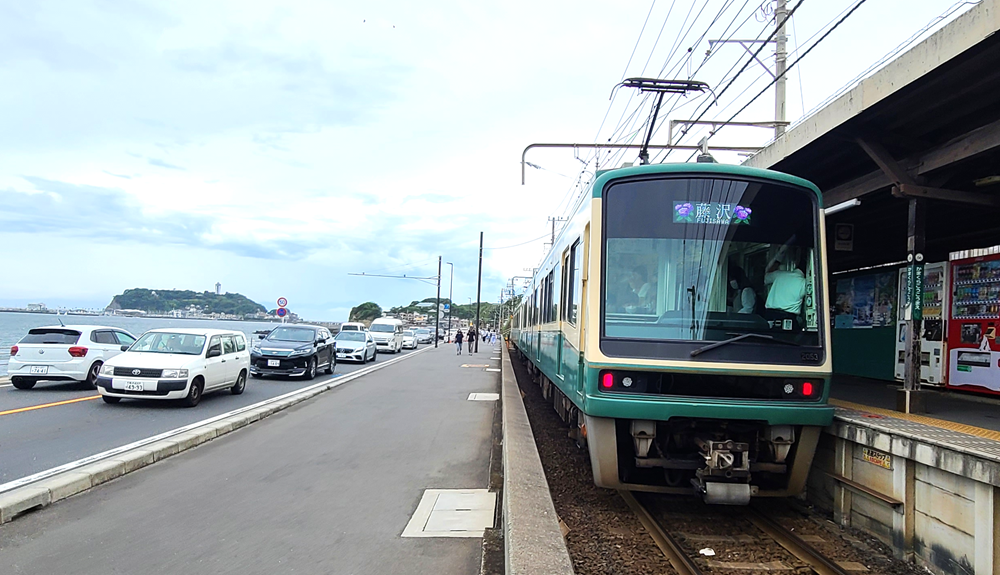
Access: 2 minutes on foot from Gokurakuji Station on the Enoshima Electric Railway
Phone:0467-22-3402
Fees:Donation
Business Hours:9:00am-4:30pm (Treasure Museum: 10:00am-4:00pm)
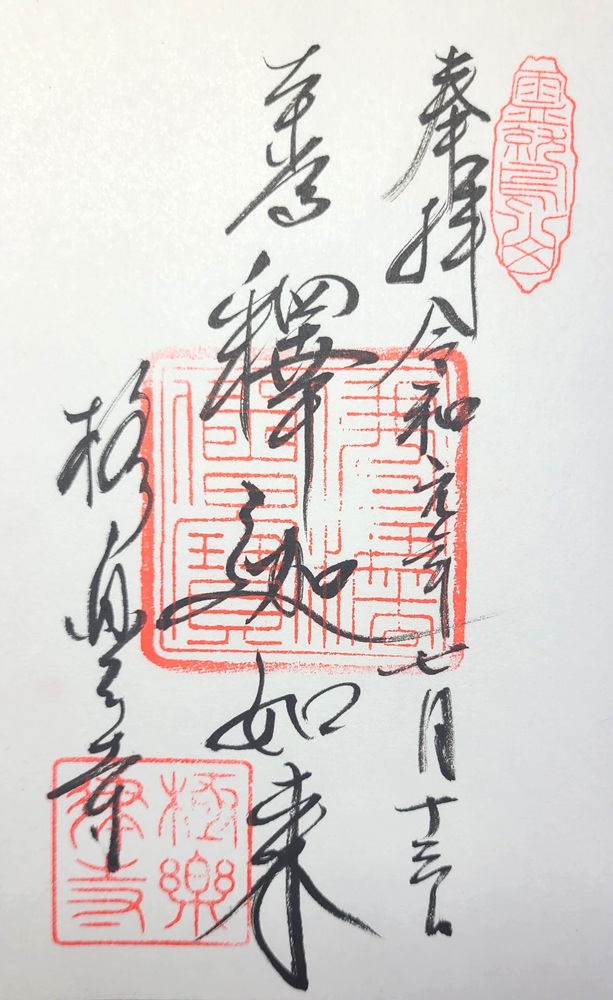

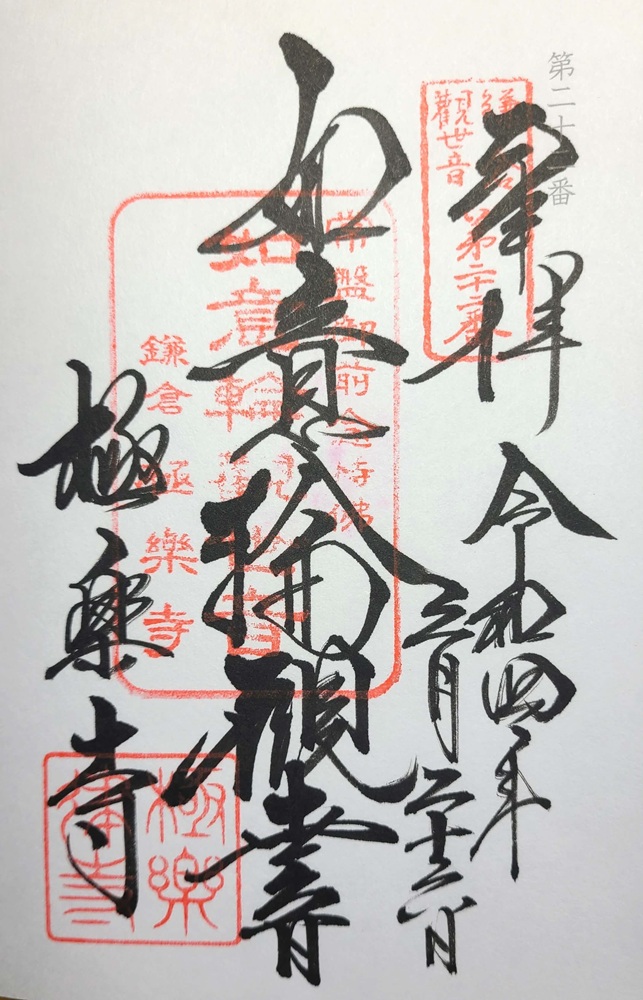
Here’s the Goshuin book you can receive at Gokurakuji Temple.
Grab a Goshuin book and start collecting stamps!
It’s a great way to clear your mind and makes temple visits so much fun.

The item was purchased through your Amazon website.

As an Amazon Associate, Kamakurasaiji earns from qualifying purchases.
コメント