
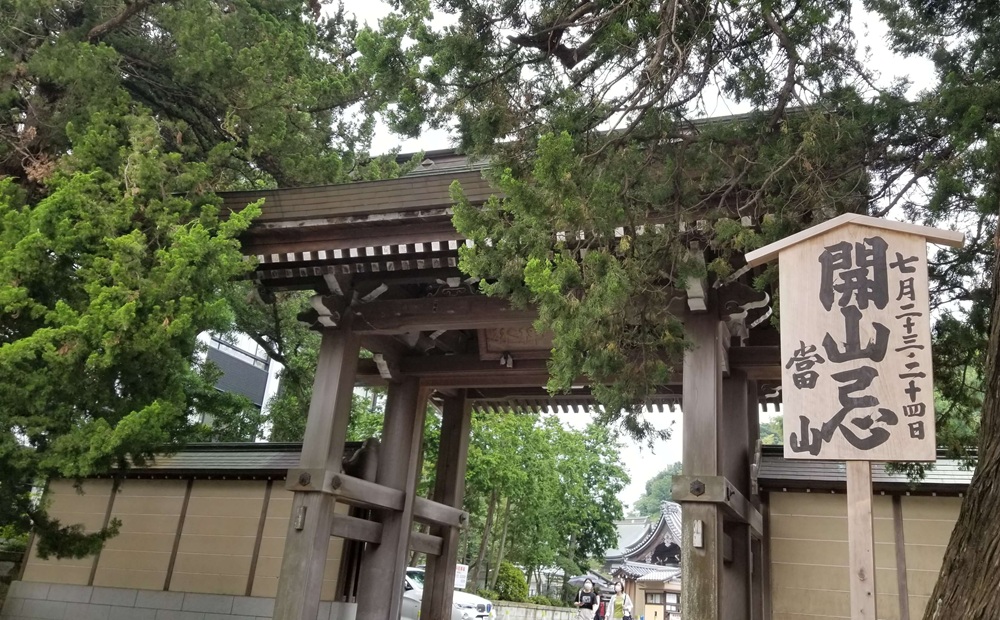
Until 2024, Kenchō-ji held its Kaizan-ki ceremony on July 24, the memorial day of its founder, Rankei Dōryū (Daikaku Zenji).
However, starting in 2025, the dates were moved to May as a precaution against heat-related risks.
Please note that preparations for Kaizan-ki affect the schedule at Hansōbō Shrine: prayers are suspended on May 22, 23, and 24, while the shop and goshuin reception operate as usual.
Schedule
May 23 (Sat) 14:00 — Shukki (Eve Memorial Service)
May 24 (Sun) 9:30 — Kaizan-ki / Hansai
It’s best to arrive around 9:00, as the ceremony usually finishes around 11:00.
Admission to Kenchō‑ji is free on the day of the Kaizan‑ki ceremony.
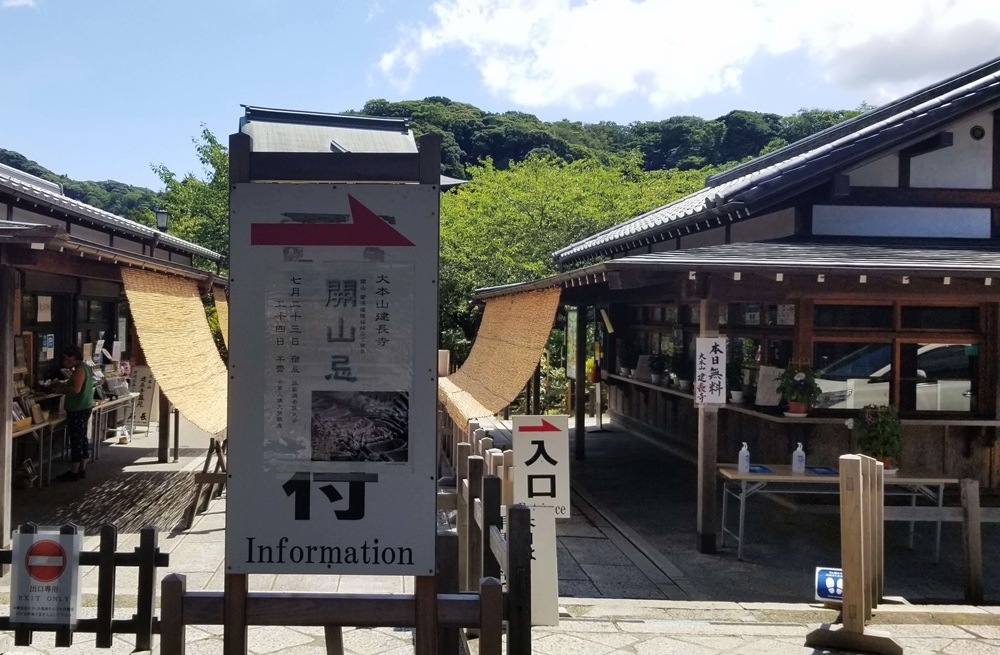
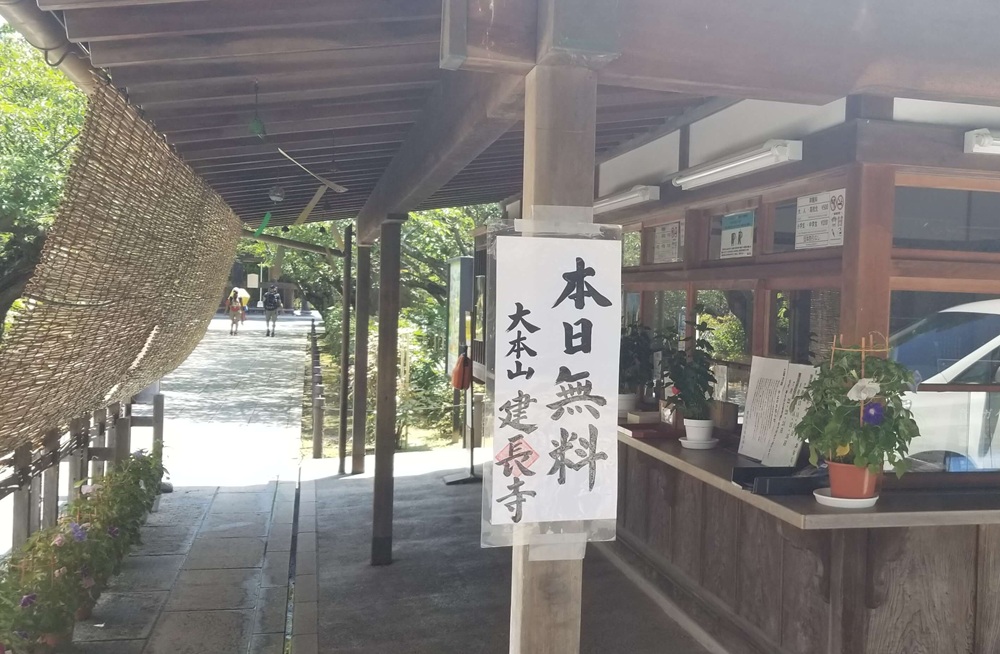
I attended the Kaizan-ki ceremony on July 24 in both 2020 and 2021, so I’ll share the flow of the event along with the photos I took at the time.
Because these were during the COVID-19 period, there were very few visitors.
The Kaizan-ki ceremony is held at Sairai-an, a location normally closed to the public.
From outside, you can hear the sound of the temple bell echoing through the quiet forest.
A little after 10:00 a.m., the monks begin to emerge from Sairai-an and walk toward the Hatto (Dharma Hall).
There, they line up in formal robes and perform the ritual, followed by a procession inside the hall as the chanting continues.
You can also view the interior of the Butsuden (Main Hall) from outside, which gives you a glimpse of the solemn atmosphere inside.
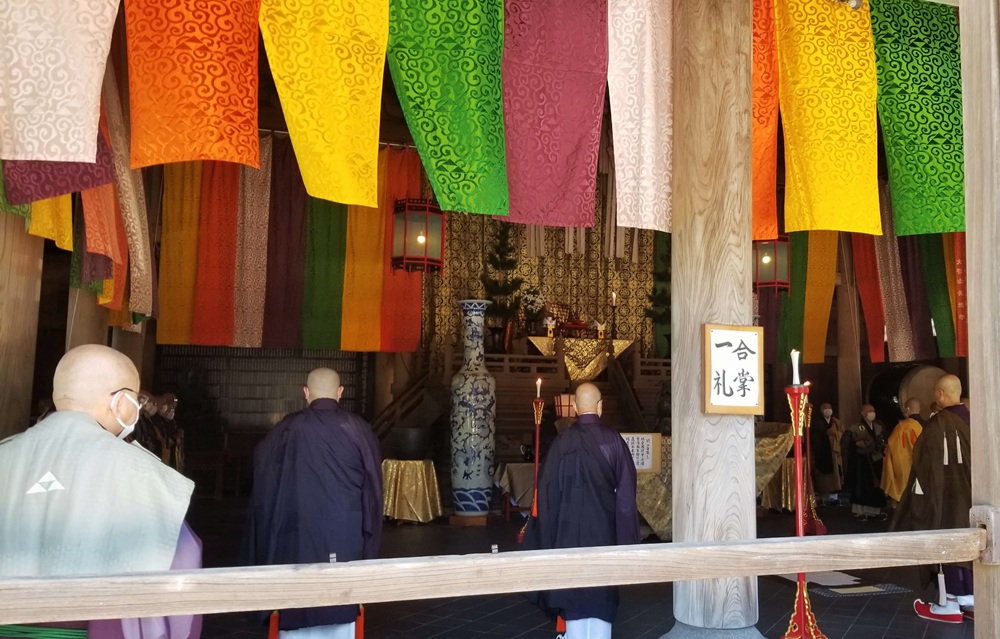
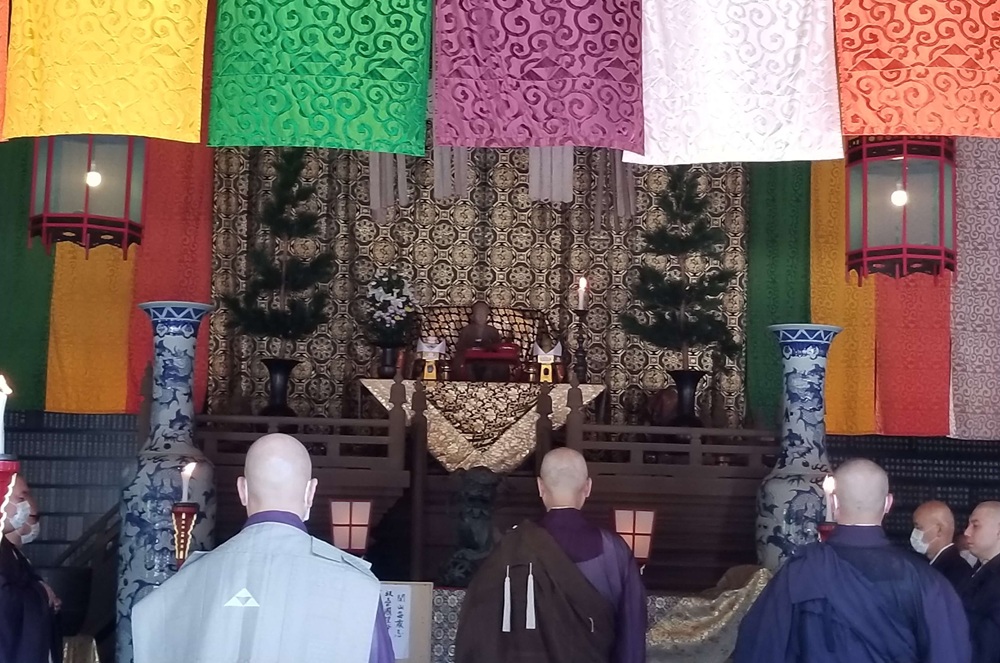
It’s also a rare chance to see the back doors of the Butsuden open, something that is normally kept closed throughout the year.
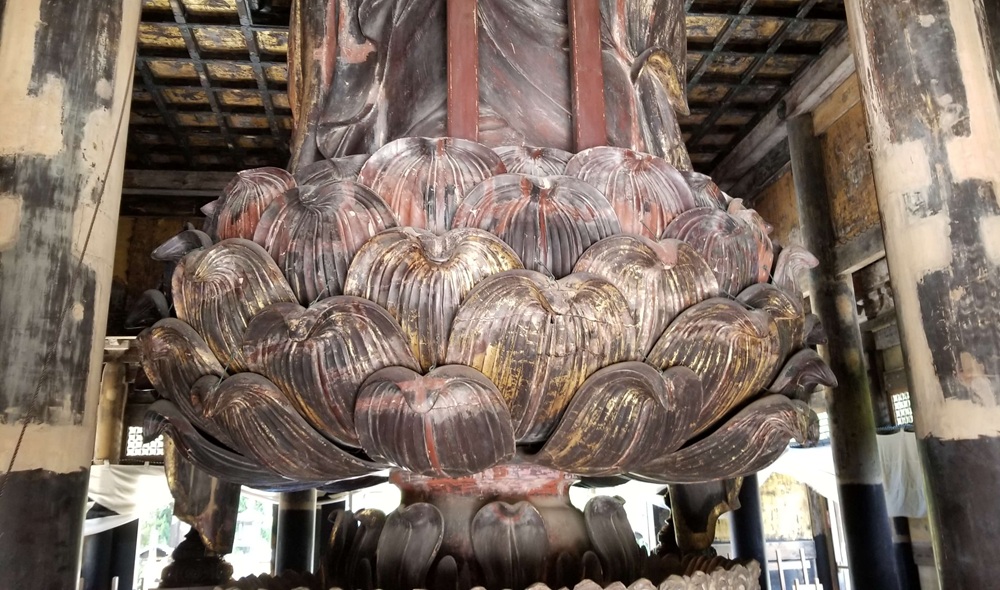
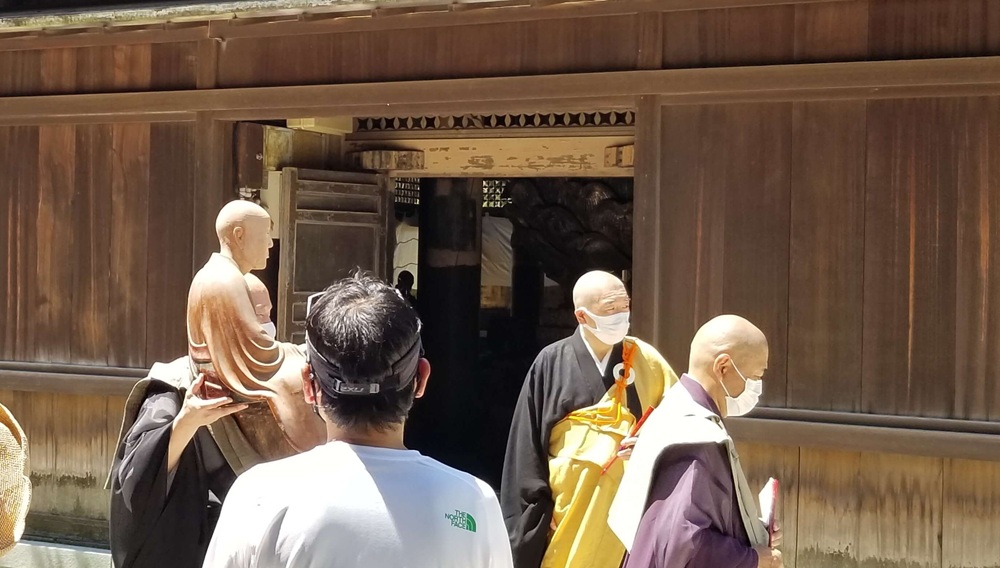
I don’t remember the exact details, but the timestamp on my photo shows 10:32 a.m., so it seems the ceremony had already finished by then.
By the way, the Butsuden is currently under renovation, so I’m curious how the ceremony will be conducted this year. It actually makes me even more interested to see what happens.
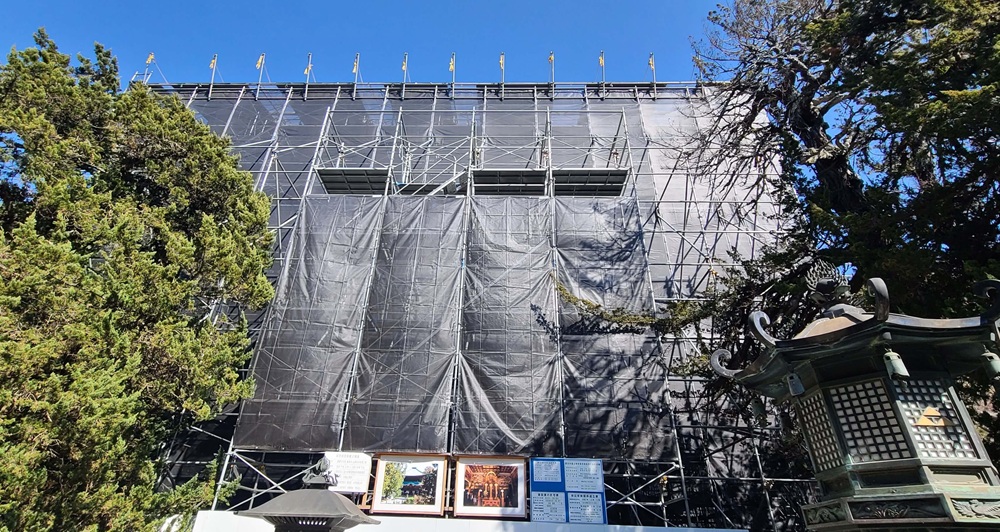
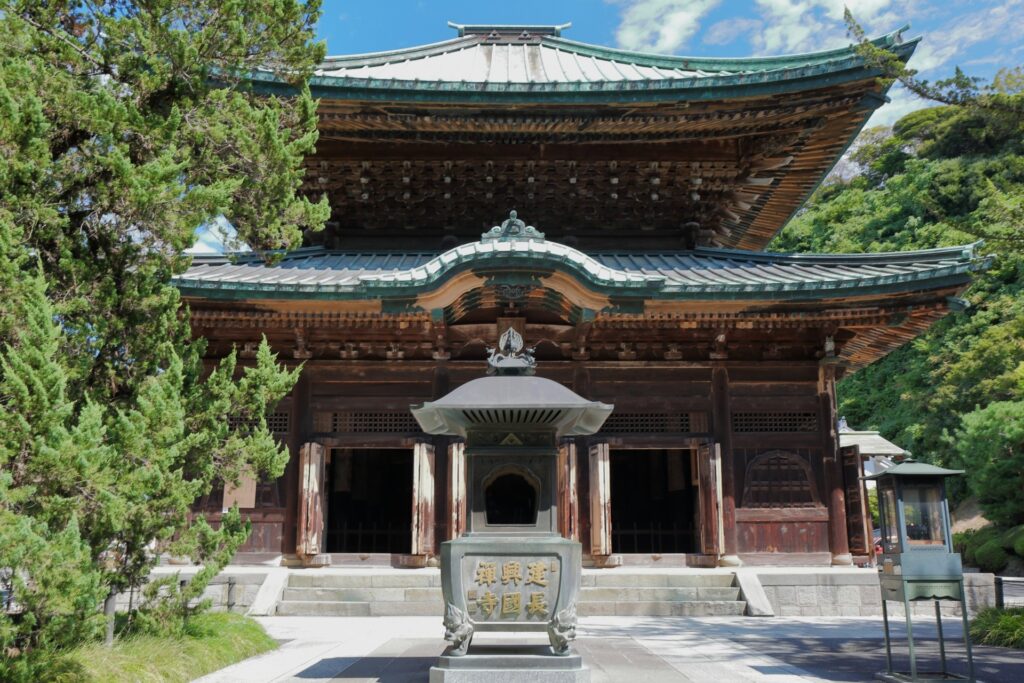
Did you know that the Butsuden at Kenchō‑ji has stood for more than a century since it was repaired after the Great Kantō Earthquake?
Over the years, the building has suffered from leaks and general deterioration, so a major restoration project—including a complete roof replacement—began in February 2023.
The work is scheduled to be completed in August 2027.
During this restoration period, the 271 Jizō statues that were enshrined inside the hall are also undergoing conservation and repair.
It’s a rare moment in the temple’s long history when both the building and its sacred statues are being restored at the same time.
About Kenchō‑ji
Kenchō‑ji, ranked first among the Five Great Zen Temples of Kamakura, was founded in 1253 by Hōjō Tokiyori, who invited the eminent Chinese monk Rankei Dōryū (Daikaku Zenji) from the Southern Song dynasty.
It is known as the very first Zen training monastery established in Japan.
The temple’s formal name is Kofukusan Kenchō Kōkoku Zenji.
The mountain name Kofukusan comes from the local place name Kobukuro, while the temple name Kenchō derives from the era name of the time.
Its principal image is a seated wooden statue of Jizō Bosatsu.
Kenchō‑ji also serves as the head temple of the Kenchō‑ji branch of the Rinzai school.
As you enter the grounds, the grand temple complex unfolds in a perfectly straight line—Sōmon (Main Gate), Sanmon (Mountain Gate), Butsuden (Buddha Hall), and Hatto (Dharma Hall).
Walking through this axis feels like following a single, quiet “path of Zen,” surrounded by a deep sense of calm.
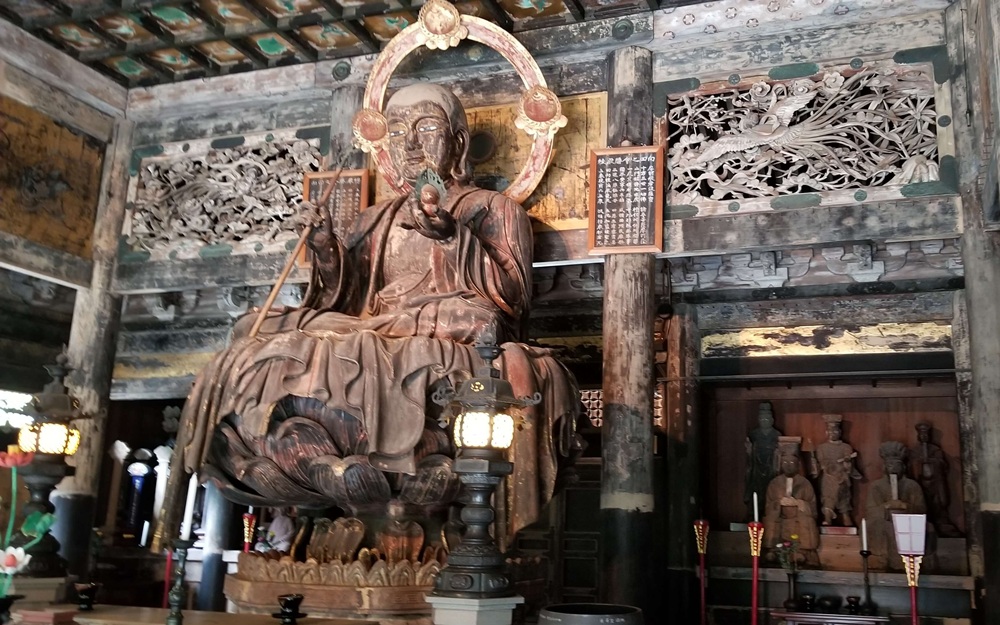
The grounds of Kenchō‑ji were once known as “Jigokudani,” or the Valley of Hell, a former execution site.
Because the temple inherited the Jizō Bosatsu statue from the old Shinpei‑ji that once stood here, Kenchō‑ji is unusual among Zen temples in having Jizō as its principal image.
Inside the Butsuden, the seated Jizō Bosatsu is enshrined alongside hundreds of small Jizō statues, creating a quiet and welcoming atmosphere for visitors.
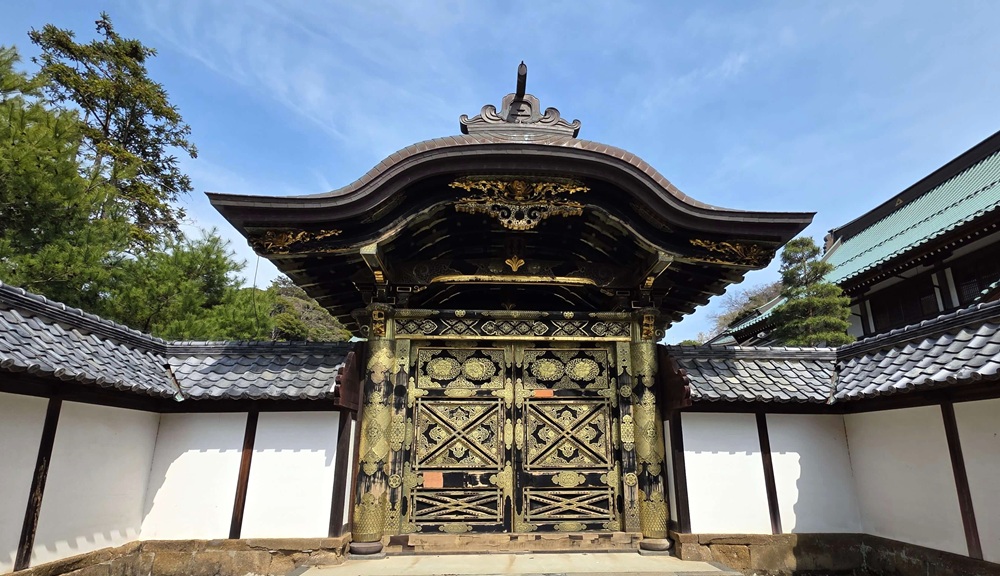
The temple grounds are filled with highlights, including the San‑gedatsumon Gate, the National Treasure bronze bell cast in 1255, and the elegant Karamon Gate.
During the annual Kenchō Festival, there are years when visitors are allowed to climb up to the Sanmon gate.
I’ve written about my experience from the year I was able to go up, so feel free to take a look.
👉 建長寺の宝物風入れ2025|開催日程・見どころ・過去の三門公開の写真紹介
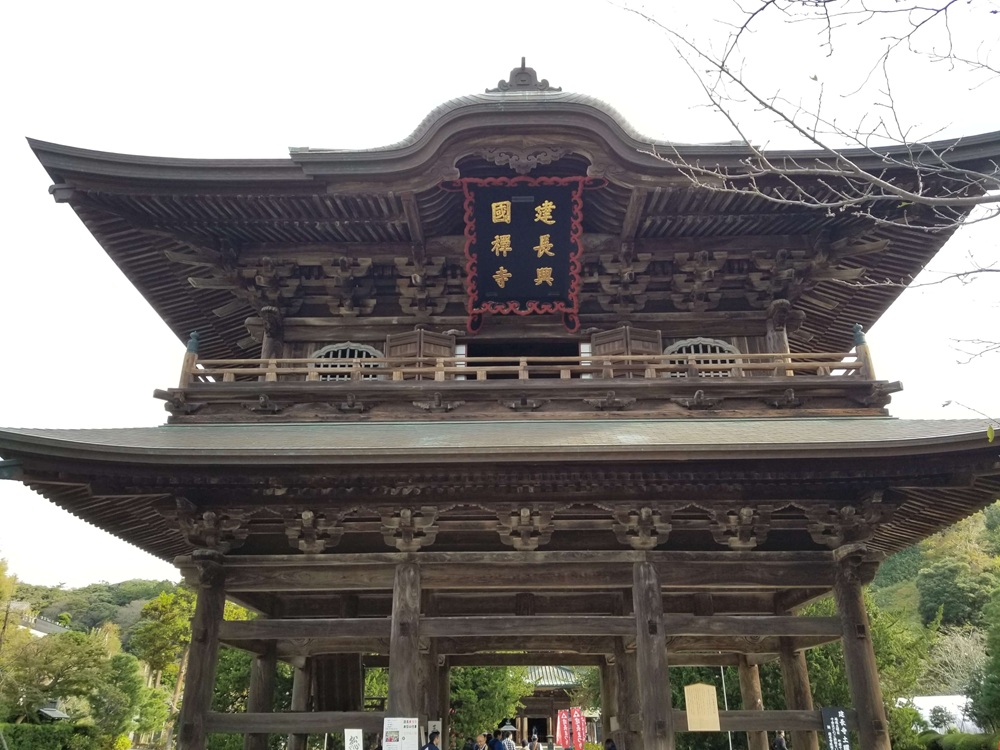
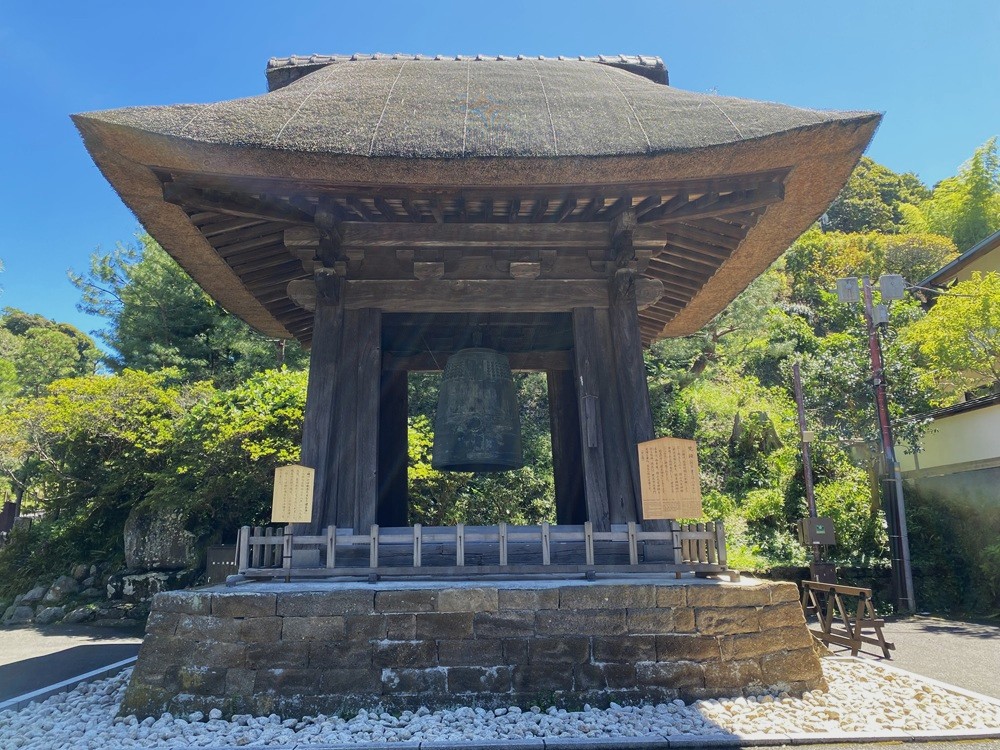
Kenchō‑ji is also home to the grave of Zuiken Kawamura, a prominent merchant and entrepreneur of the Edo period.
Zuiken played a major role in transforming Japan’s economy through innovations in transportation—most notably the Higashi‑mawari and Nishi‑mawari shipping routes—as well as large‑scale river and flood‑control projects.
In his later years, he became deeply devoted to Zen practice and chose to be laid to rest here at Kenchō‑ji.
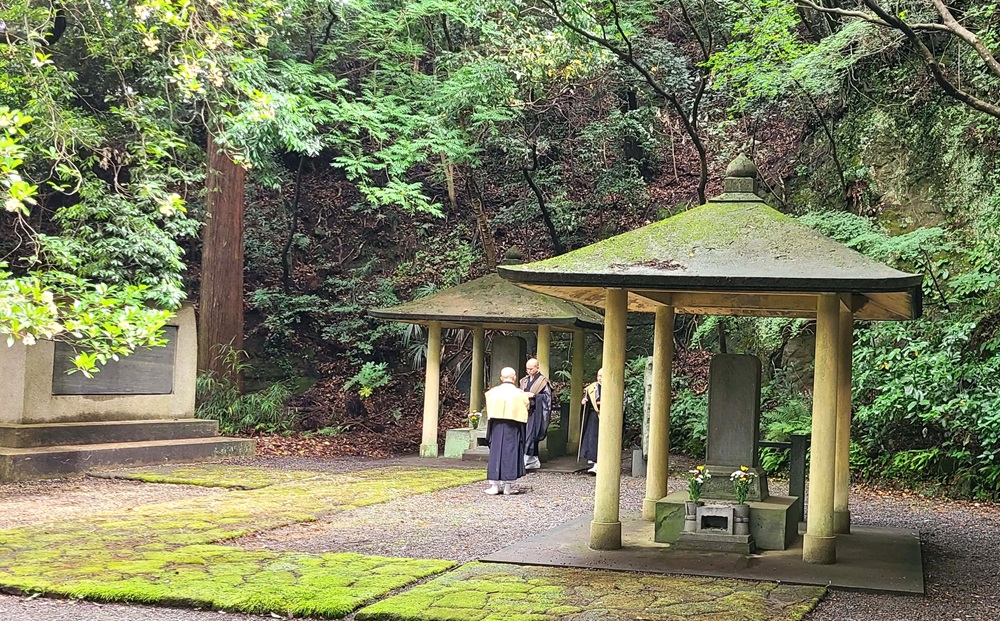
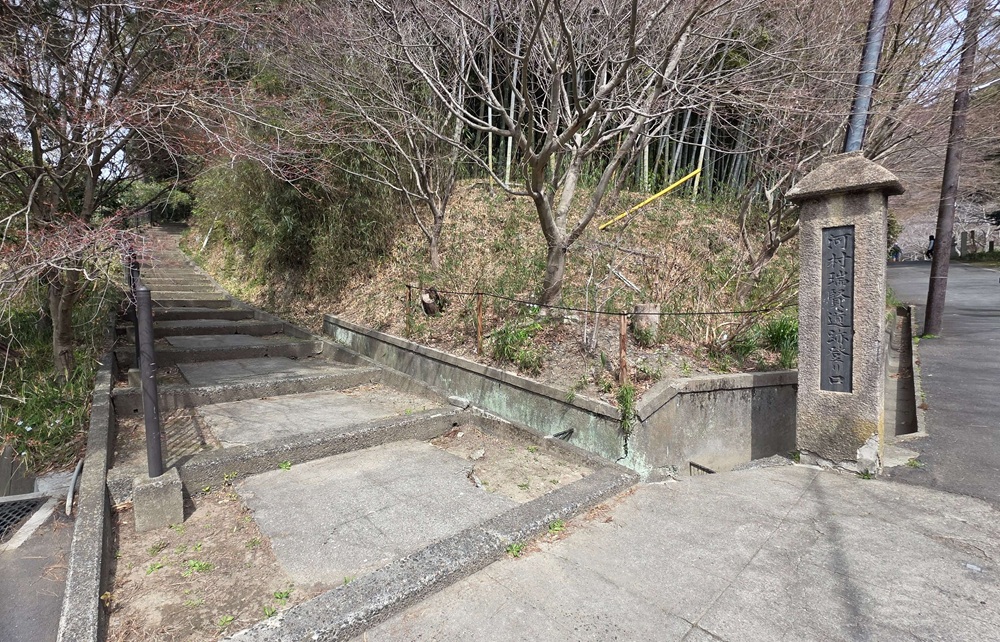
The “Zuiken Memorial Ceremony” is held every year on June 18.
I’ve also written a separate post about this event, so feel free to take a look if you’re interested.
👉 2026.6.18 Zuiken Memorial and a Beautiful Hydrangea Walk in Kamakura
Founder: Rankei Dōryū
Rankei Dōryū, the founding abbot of Kenchō‑ji, was born in Fuzhou in the Southern Song dynasty (near present‑day Chongqing) and entered the monastic life at the age of thirteen.
Inspired by his connection with the monk Getsuō Chikyō, who had traveled to Japan, Dōryū decided to make the journey himself and arrived in Hakata in 1246.
Before long, he was invited to Kamakura by the regent Hōjō Tokiyori.
Tokiyori was deeply impressed by Dōryū’s spiritual insight and leadership.
He trusted him so much that he sought Dōryū’s guidance even during breaks from military duties.
In 1253, Tokiyori founded a new Zen temple that would become the center of Zen practice in Japan, appointing Dōryū as its first abbot.
This marked the beginning of Kenchō‑ji.
Because 1253 corresponds to the fifth year of the Kenchō era, the temple was named after that era.
Records show that early Kenchō‑ji was a truly international Zen monastery—many of its abbots were Chinese monks, and Chinese was commonly spoken throughout the grounds.
At Kenchō‑ji, Dōryū established strict monastic regulations and guided practitioners with firm discipline.
His teachings were later compiled into the Hōgo Kisoroku, which is now designated as a National Treasure.
During the Mongol invasion period, he was even suspected of being a Yuan spy and was exiled to Kai and Izu.
Despite these hardships, he remained steadfast in his Zen practice and contributed to the revival of several temples, eventually serving as abbot of Kennin‑ji in Kyoto, Jufuku‑ji, and Zenkō‑ji in Kamakura.
He later returned to Kenchō‑ji, where he passed away on July 24, 1278, at the age of 66.
After his death, his successor Mugaku Sogen came to Japan and went on to become the founding abbot of Engaku‑ji, the second of the Five Great Zen Temples of Kamakura.
Other Information
The 750th Memorial of Daikaku Zenji, Founder of Kenchō‑ji
Kenchō‑ji is currently preparing for the 750th memorial of Daikaku Zenji, which will be observed in 2028.
In anticipation of this major milestone, the temple is carrying out cultural‑property restorations and planning a series of commemorative events.
The term “onki” refers to a grand memorial ceremony held every fifty years after a master’s passing.
It is a time to honor the virtues of Daikaku Zenji, return to his teachings, and reflect deeply on one’s own practice in gratitude for his legacy.
👉 750年遠諱(おんき) | 巨福山 建長寺
Access
Address: 8 Yamanouchi, Kamakura
Phone: 0467-22-0981
Visiting Hours: 8:30 a.m. – 4:30 p.m.
Admission: Adults (high school and above) ¥500 / Children (elementary & junior high) ¥200

Kenchō‑ji is about 1 km from Kita‑Kamakura Station, roughly a 12‑minute walk.
Along the way, you’ll pass several wonderful temples, including Engaku‑ji (No. 2 of the Five Great Zen Temples), Tōkei‑ji (the historic “divorce temple”), Jōchi‑ji (No. 4 of the Five Mountains), and Chōju‑ji, the former residence of Ashikaga Takauji, which is open only on weekends.
It’s a route full of highlights, perfect for a leisurely stroll.
Kenchō‑ji is also spectacular during the cherry blossom season
👉 Where can you see the beautiful cherry blossoms in Kamakura?
コメント