
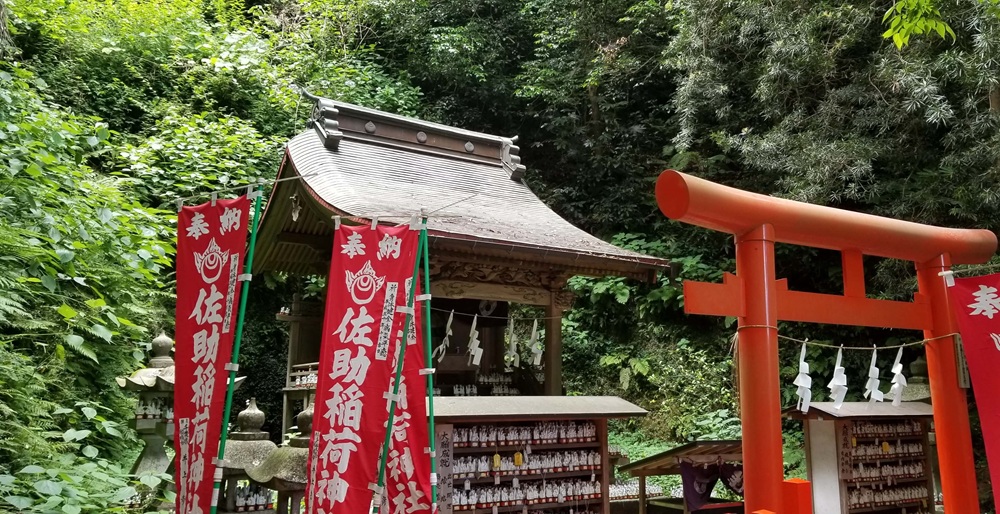
At Sasuke Inari Shrine in Kamakura, an Eleven-Faced Kannon statue is enshrined.This Eleven-Faced Kannon is opened to the public only once a year.Please don’t miss this rare, once-a-year opportunity.
【PR】Mt. Fuji Glass, Rock Glass, Cherry Blossom Cut, Luxurious, Artisan Handmade, Paulownia Box, Japanese Sake, Beer, Whiskey, Glass, Stylish, Celebration, Wedding Gift, Sixtieth Birthday Celebration, Gift
Visit the FONYUHUA Store

The item was purchased through your Amazon website.

Schedule
The ceremony starts at 12:00, so it’s best to arrive a little early.
If you don’t, you may not be able to get near the front, and it could be hard to see from the back.
After the ritual ends, however, visitors can usually view it in turn.In 2025, the event was canceled because the head priest was unable to attend due to an injury the day before.
(T T)
So there are no photos of the opening, but normally the doors of the shrine are opened.
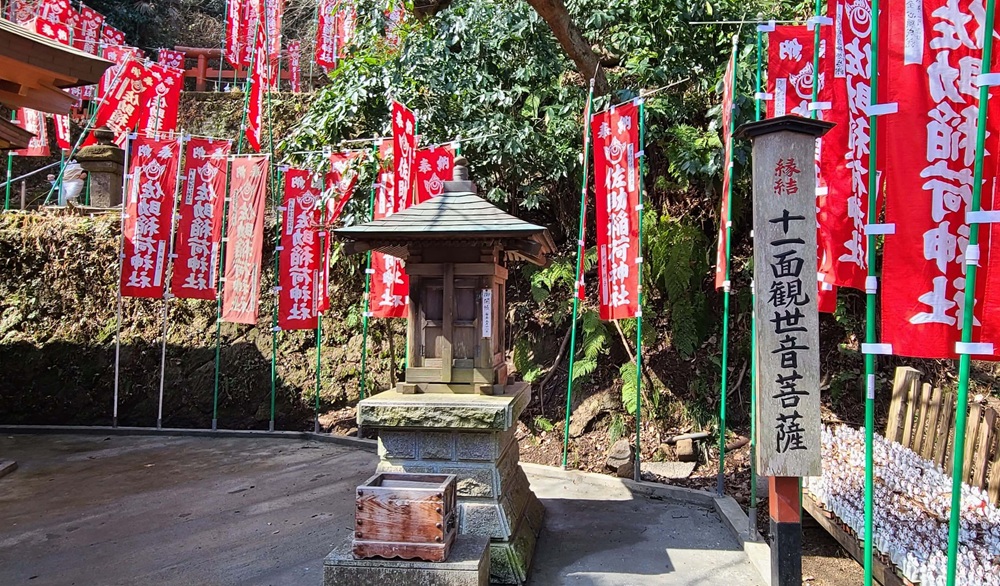
Sasuke Inari Shrine , an Eleven-Faced Kannon statue
Isn’t it interesting that an Eleven-Faced Kannon is enshrined at a Shinto shrine?
According to the official website of Sasuke Inari Shrine, it is explained as follows.
The God of Marriage is worshiped at the entrance of the approach to a shrine. The beautiful princess who was not blessed with good matches, She carved a Kannonbosatu to wish for young couple’s god much. You are allowed to see Kannnonbosatu only once a year on May 18th .
👉 Sasuke Inari Shrine「God of Matchmaking」
The Origins of Sasuke Inari Shrine
At the end of the Heian period, Minamoto no Yoritomo fell into misfortune after his father, Minamoto no Yoshitomo, was defeated in the Heiji Rebellion and was exiled to Hirugashima in Izu.
During his long years in exile, Yoritomo met Hōjō Masako, and the two eventually married.
It is said that one day, while Yoritomo was bedridden with illness, a mysterious event occurred.
In his dream, a white-haired old man appeared, calling himself the “Inari of the Hidden Village,” and urged Yoritomo to rise up and overthrow the Taira clan.
Taking this dream as a divine message, Yoritomo resolved to reclaim his destiny.
In 1180, Minamoto no Yoritomo rose in rebellion together with the Hōjō clan and other warriors of eastern Japan, setting out on the path to overthrow the Taira clan.
After overcoming many hardships, the Taira were finally defeated in 1185 at the Battle of Dan-no-ura, thanks to the efforts of his younger brothers, Minamoto no Yoshitsune and Noriyori.
In 1192, Yoritomo established the Kamakura Shogunate, creating Japan’s first full-fledged warrior government.Kamakura, chosen as the seat of the shogunate, was a place of special significance to Yoritomo, and it is said that he rarely left the area throughout his life.
Deeply revered by Yoritomo was the “Inari of the Hidden Village,” the deity who had once appeared to him in a dream during his years of exile.
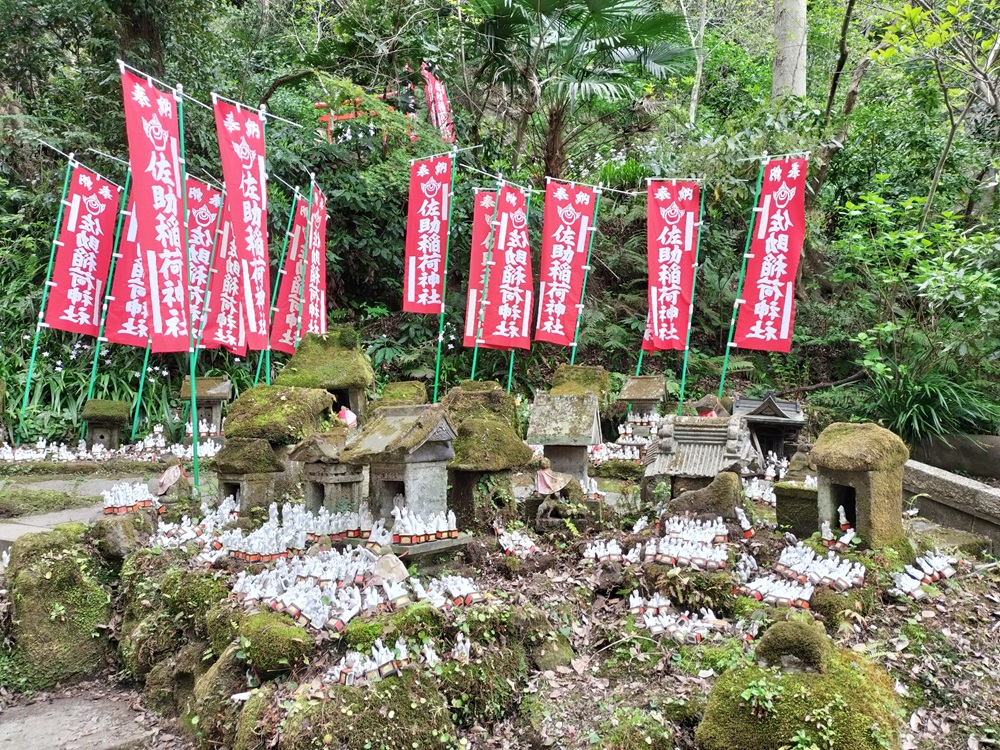
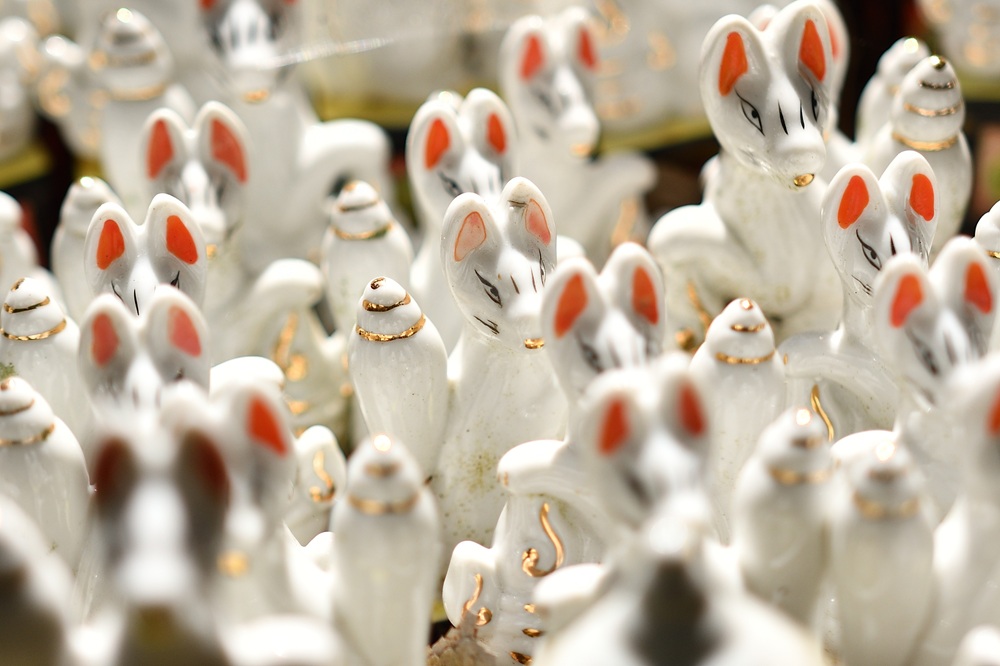
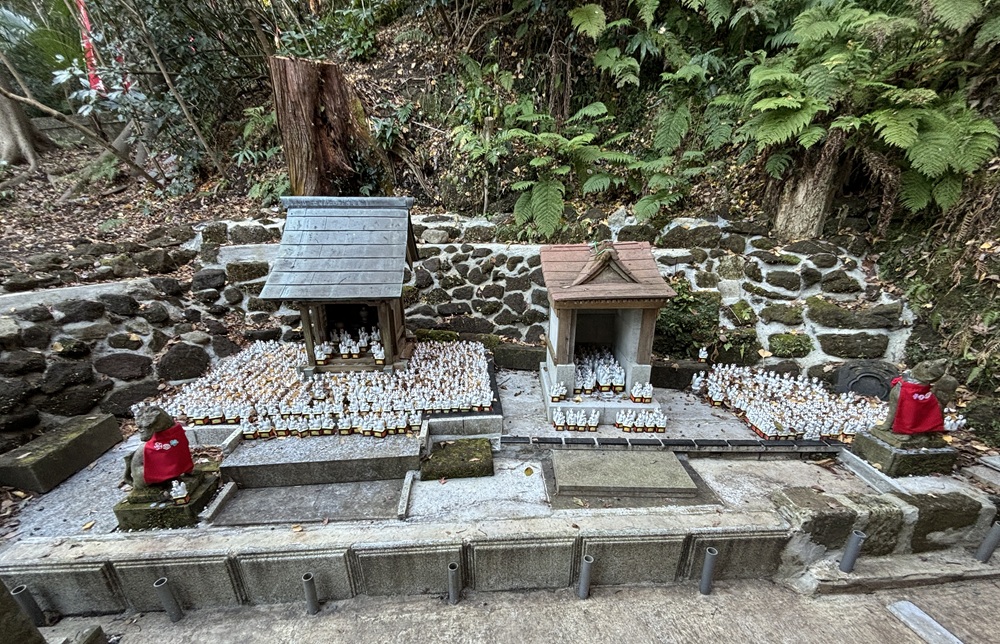
According to shrine tradition, during the Kenkyū era (1190–1199), Yoritomo ordered his retainer Hatakeyama Shigetada to locate the “Hidden Village shrine” and have it rebuilt as an Inari shrine.
In his youth, Yoritomo was known as Sukedono, derived from his court title, and because this deity was believed to have aided him, the shrine came to be called Sasuke Inari Shrine.
It is said that the divine protection of this Inari deity supported Yoritomo’s rise from leading a rebellion to becoming Seii Taishōgun.
For this reason, Sasuke Inari Shrine is also known as the “Inari of Success” and a “Shrine of Victory,” and it continues to attract many worshippers today.
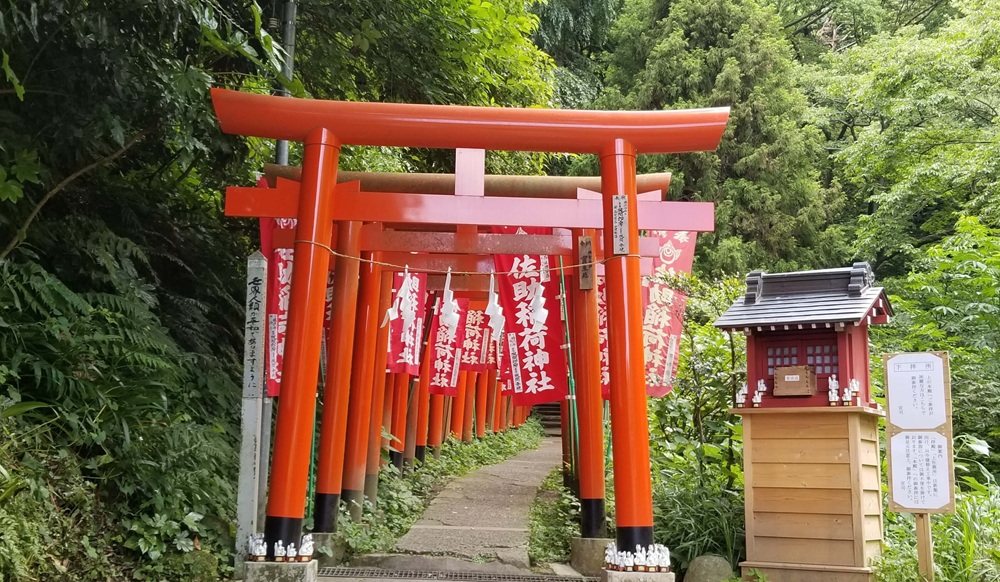
The shrine grounds, lined with vivid vermilion torii gates, convey a quiet yet powerful atmosphere, preserving the history of Kamakura and the legacy of Yoritomo to this day.
Hiking course from Sasuke Inari Shrine
On September 9, 2019, Typhoon No. 15 struck Kamakura, causing significant damage to Sasuke Inari Shrine.
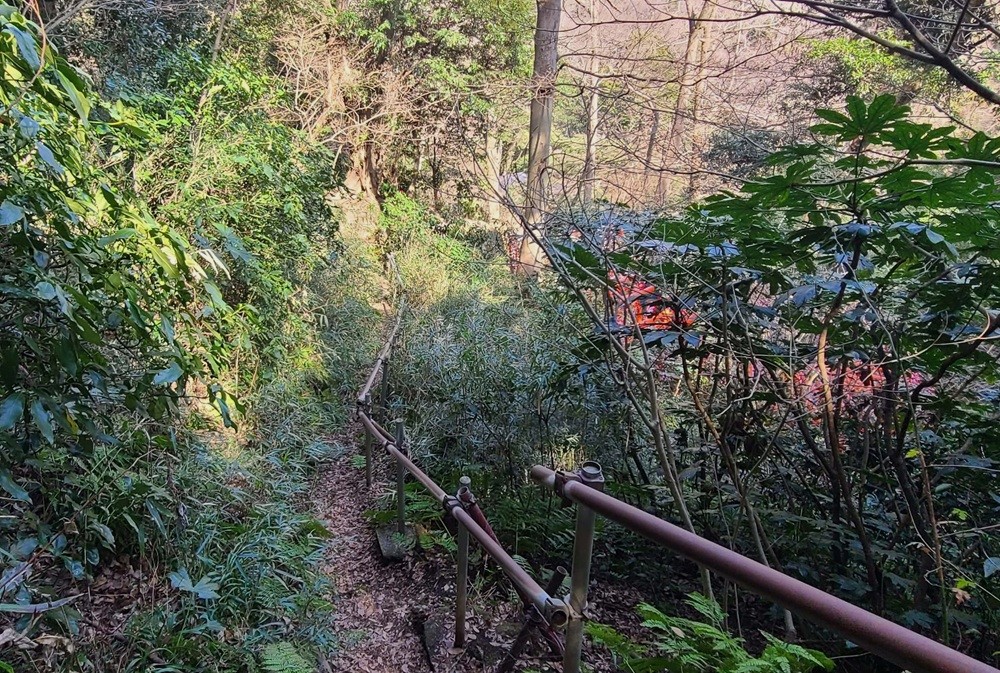
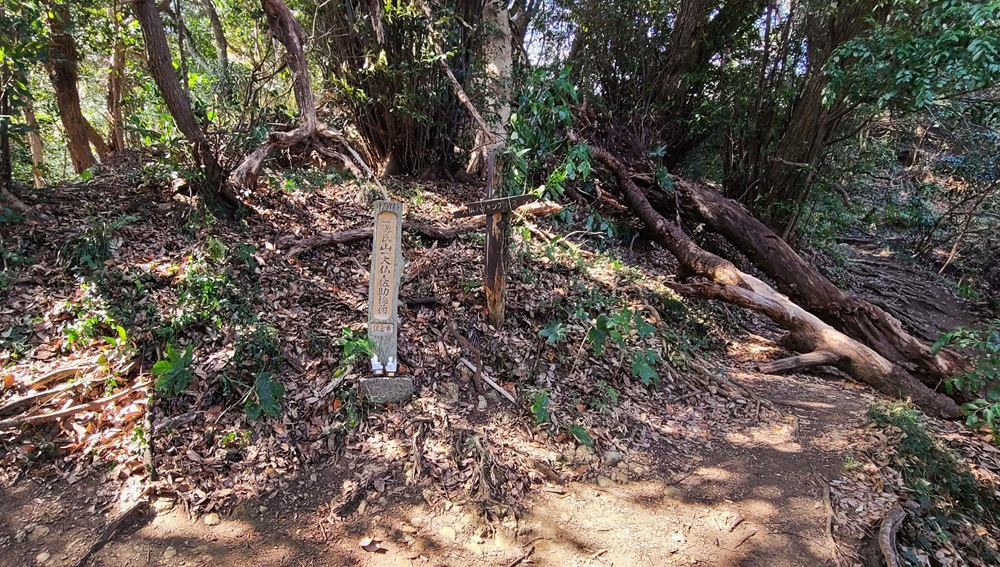
There is a path from beside the shrine’s main hall that leads to the Daibutsu hiking course, but it was closed due to the storm damage.
It seems that the trail has now been largely restored and is in much better condition.
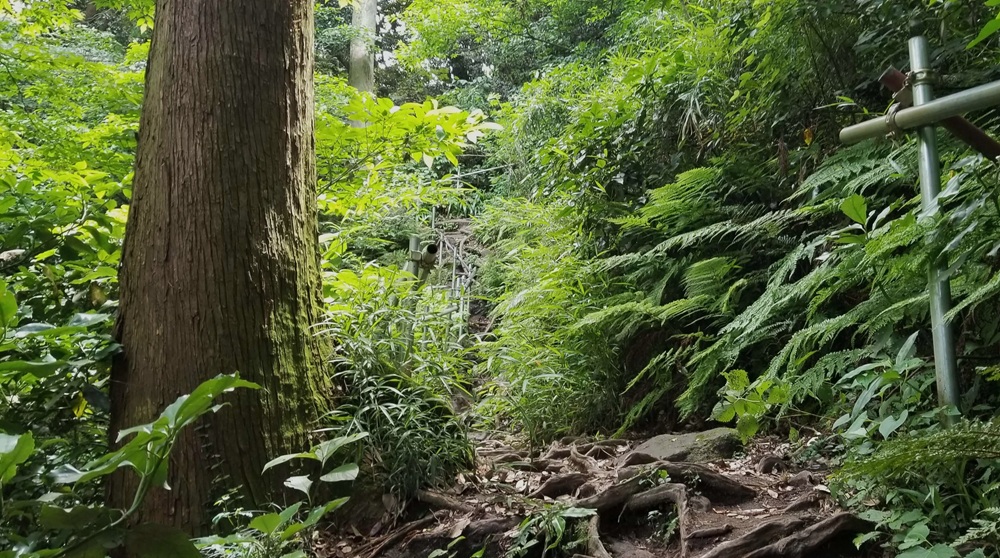
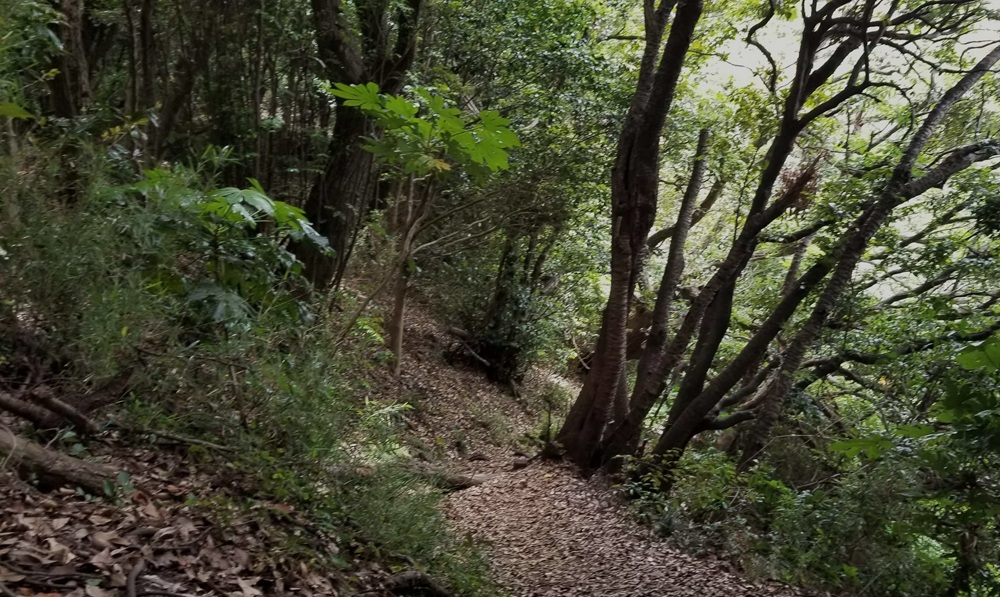
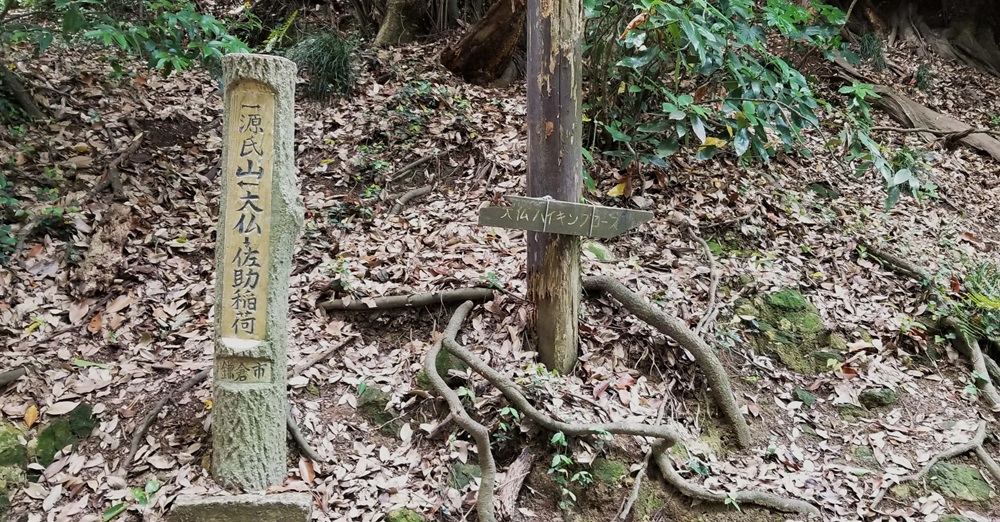
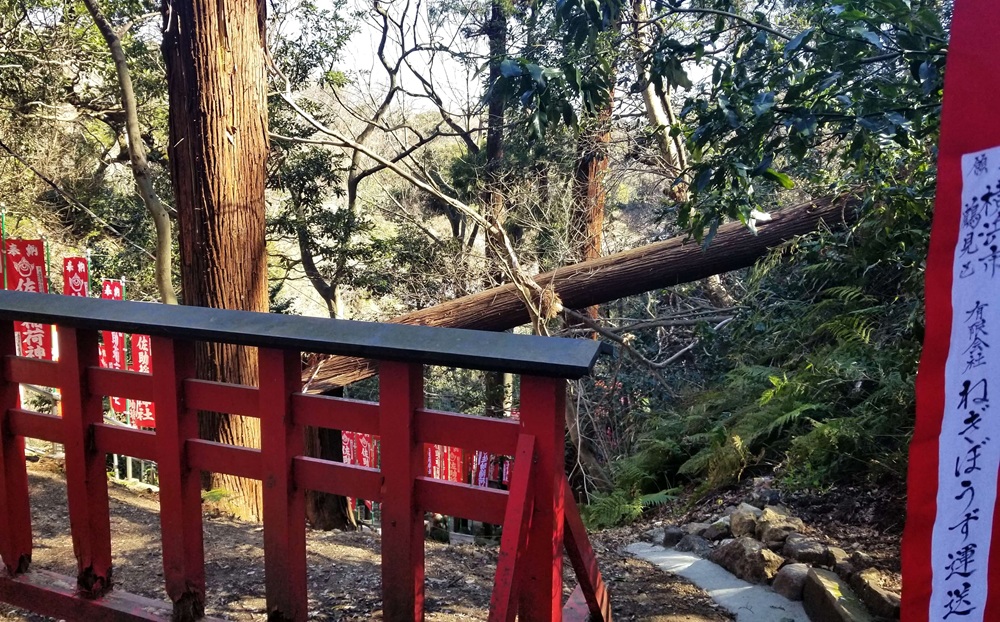
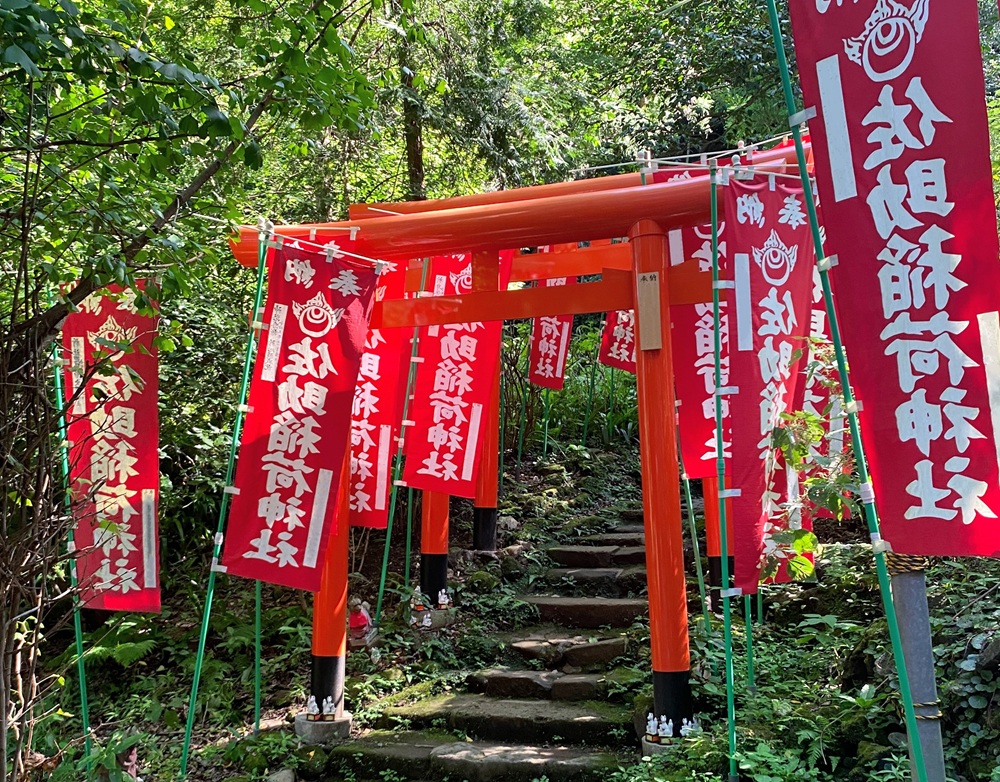
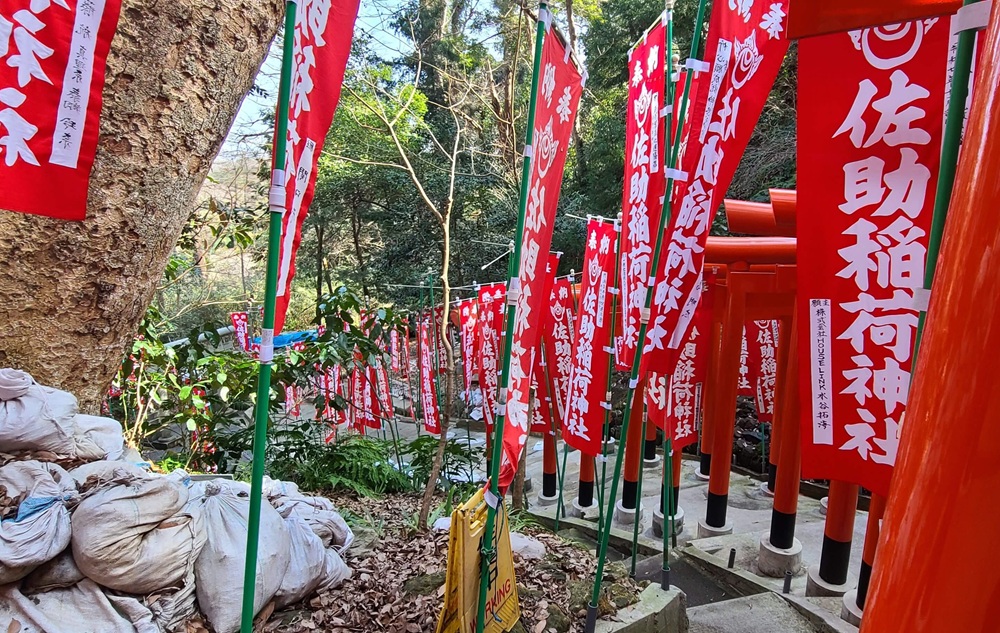
I went to Sasukeinari Hiking Course in 2026.
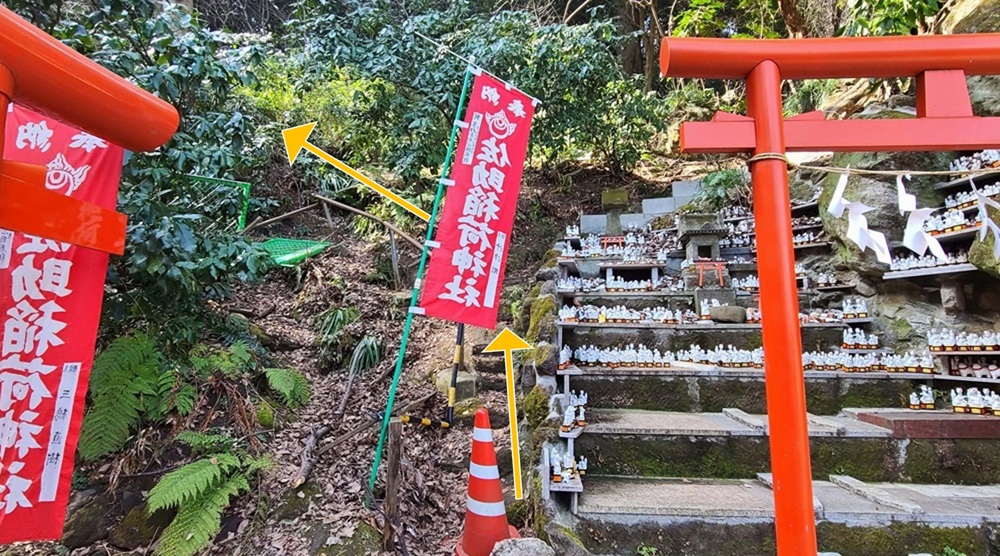
If you climb in the direction of the arrow, you will arrive at the Great Buddha hiking trail.
Sasuke Inari Shrine: Then and Now
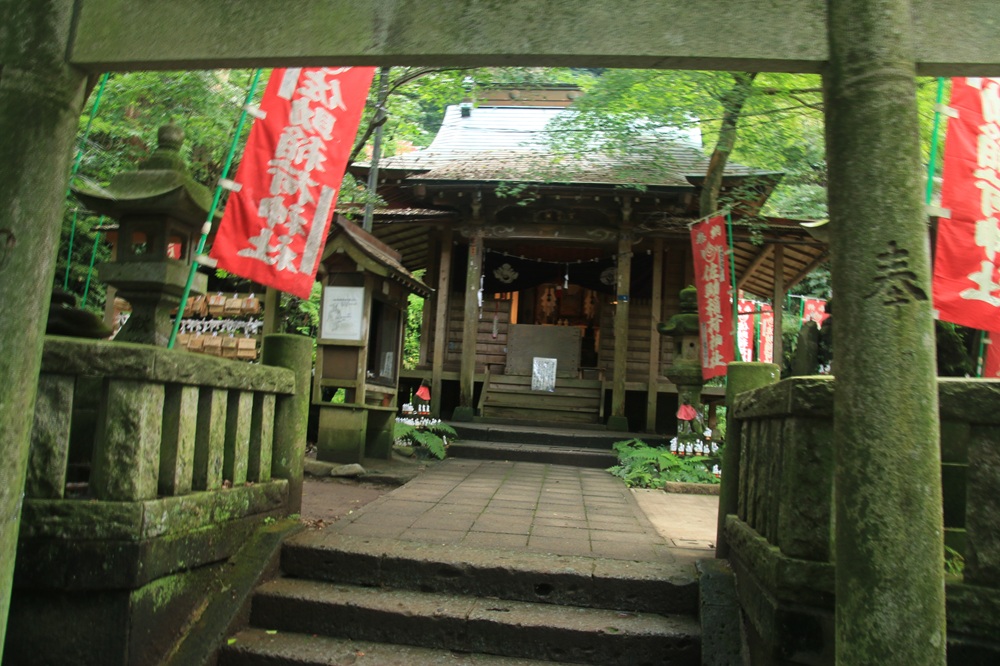
Haiden
The haiden is the hall where visitors come to pray to the deity.
It is built in front of the honden, which is the main sanctuary where the deity actually resides.
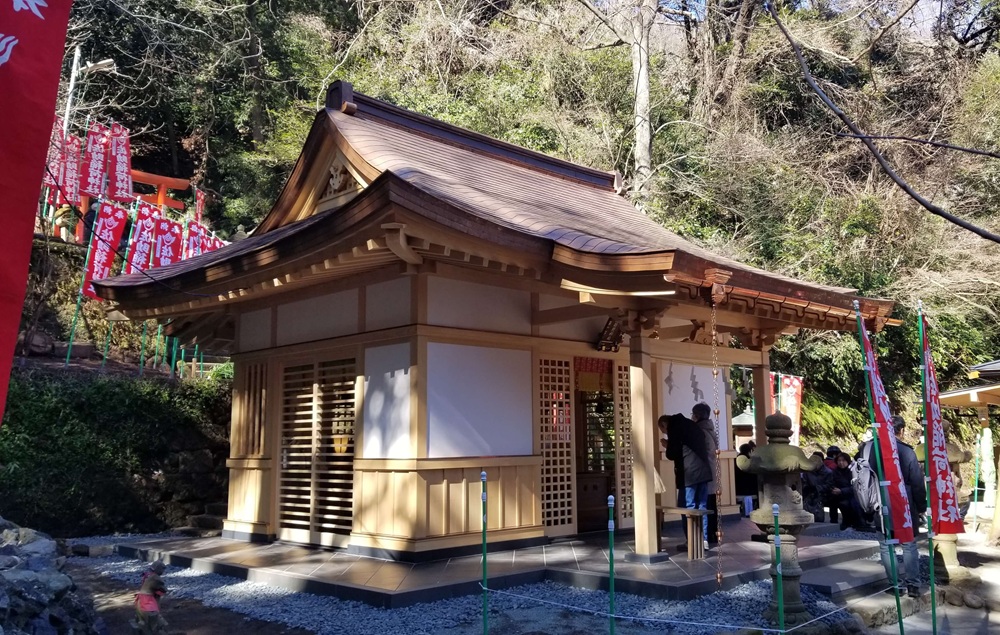
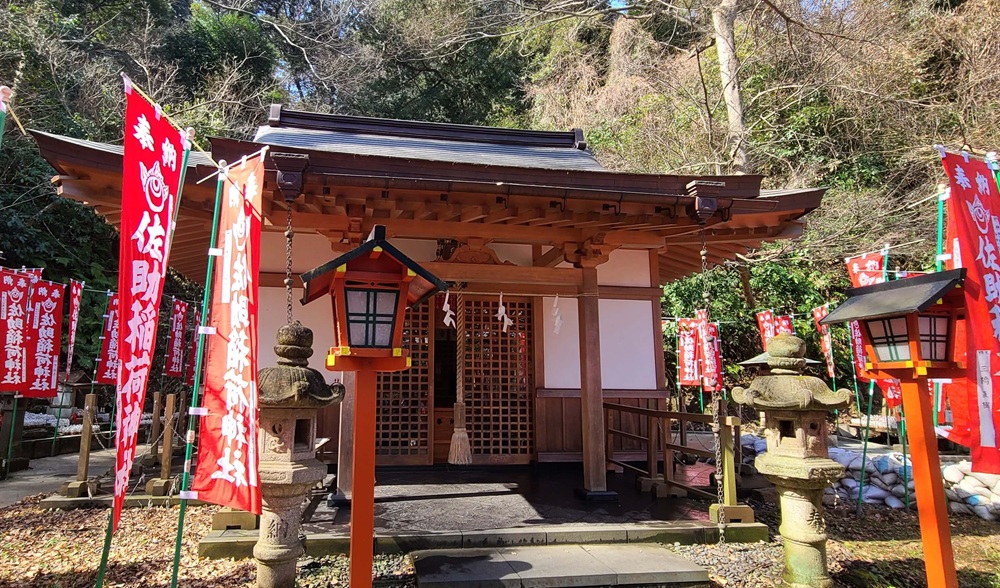
Honden
Behind the haiden, up a flight of stairs, stands the honden. No one is allowed to enter the honden except for the head priest. The honden was originally rebuilt in 1895 (Meiji 28), and it was rebuilt again after the 2019 typhoon.
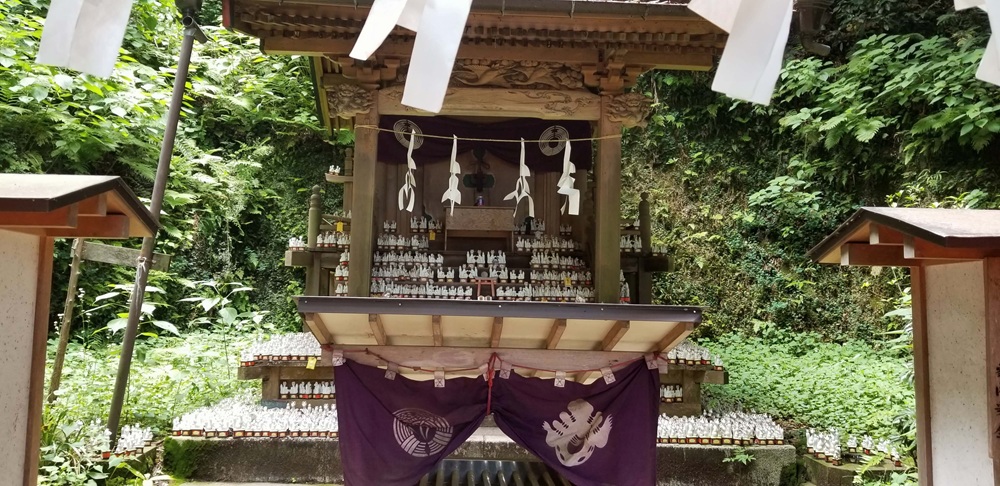
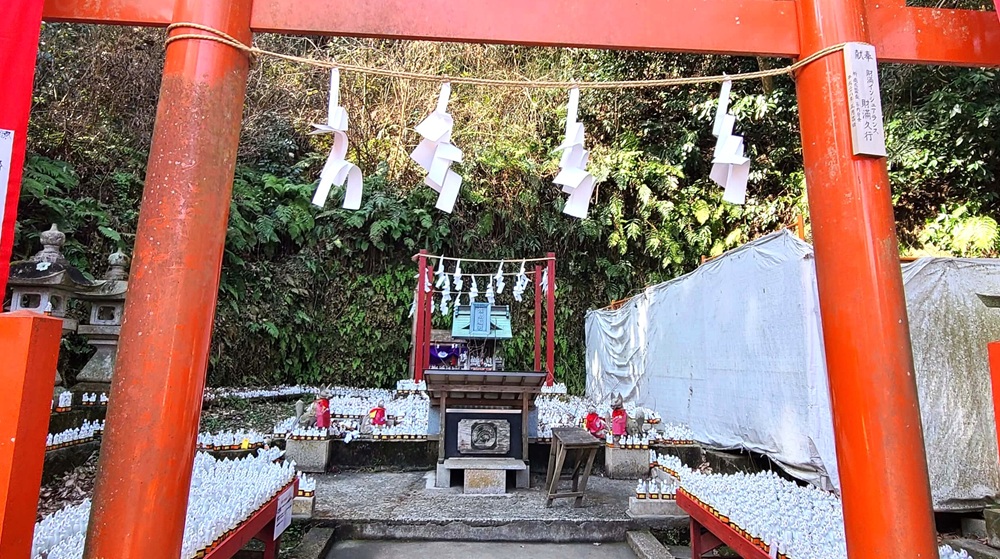
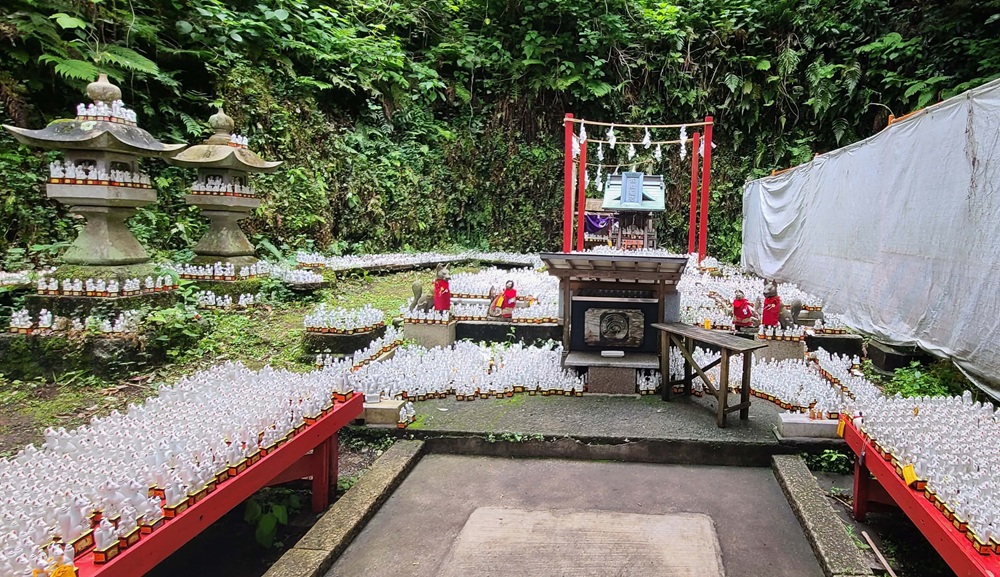
Reiko Sen
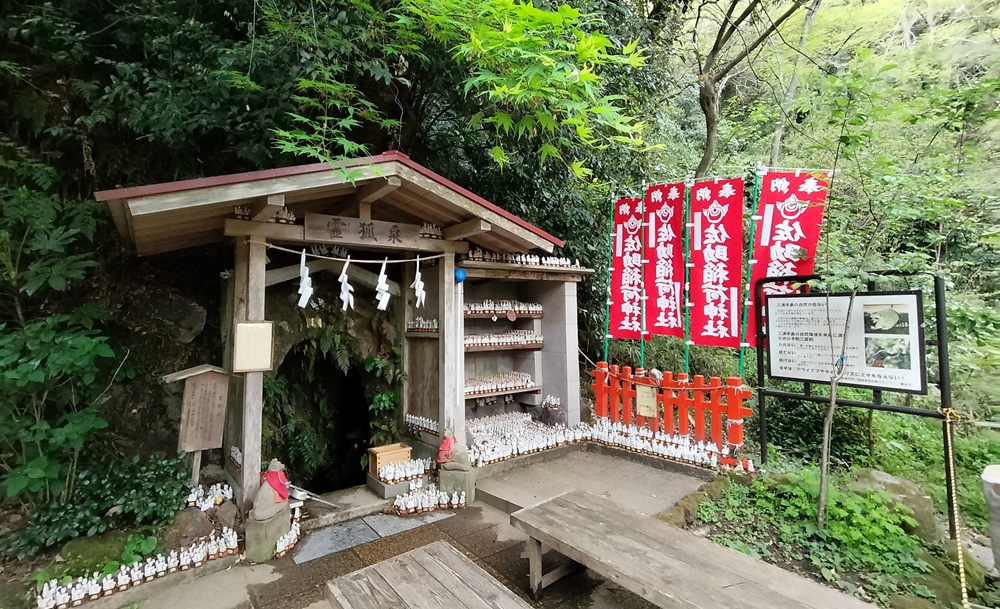
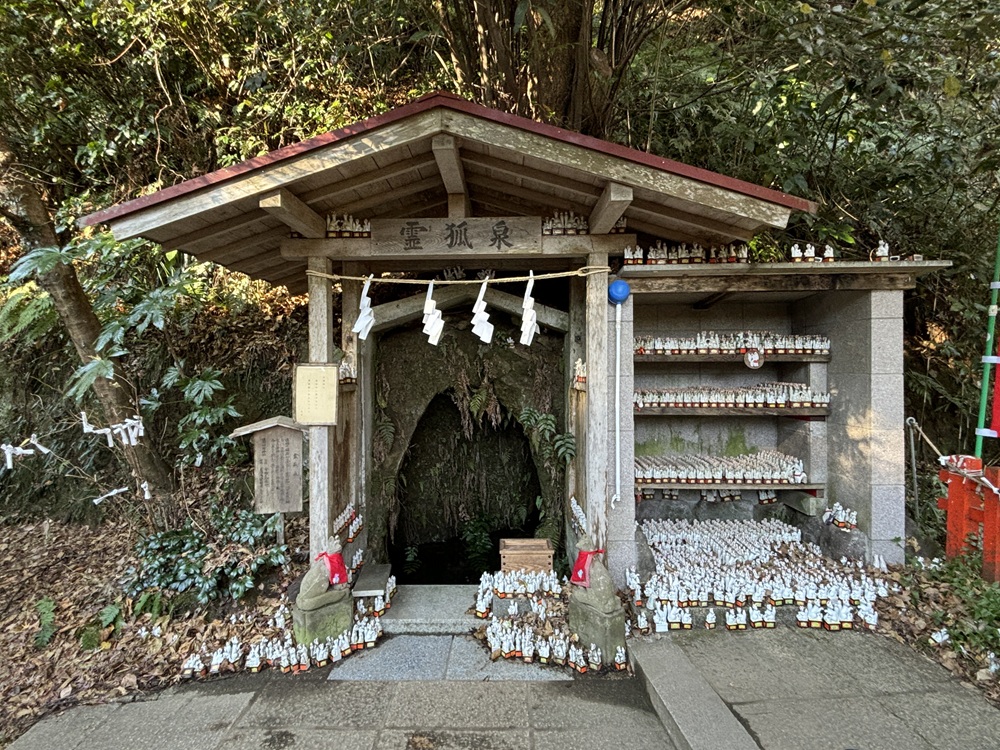
In a corner of the Sasuke Inari Shrine grounds, there is a spring called the Reiko no Shinsui, or “Sacred Fox Water.” Revered as a source of life, this spring—also known as Reiko Spring—is said to flow continuously even today.
Visitors can fill bottles and take the water home, for example to add to a bath, to receive its blessings. (It is not for drinking.)
Access
The nearest station is Kamakura station. About 20min.by walk.
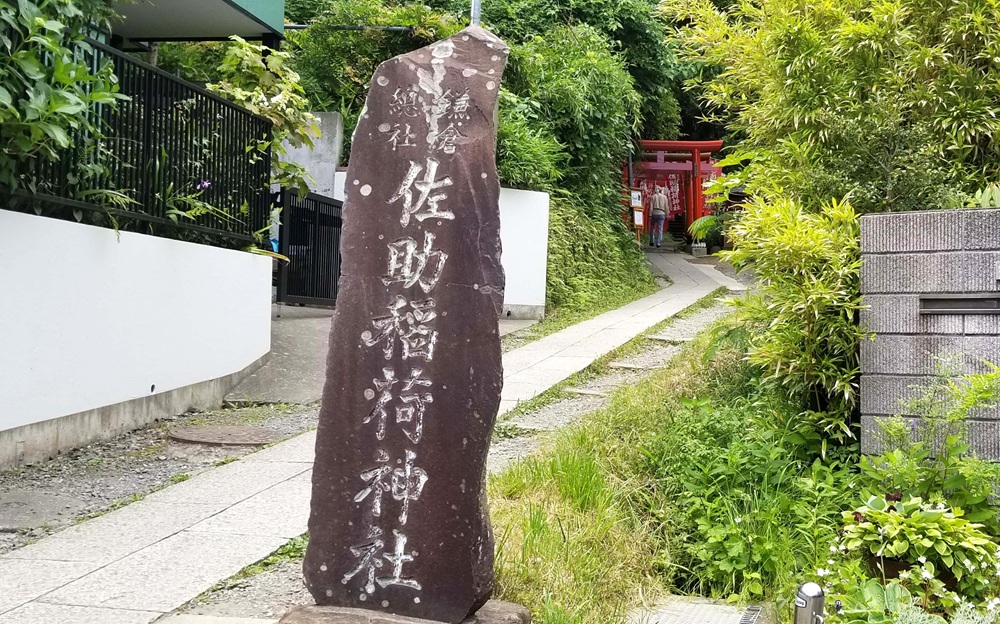
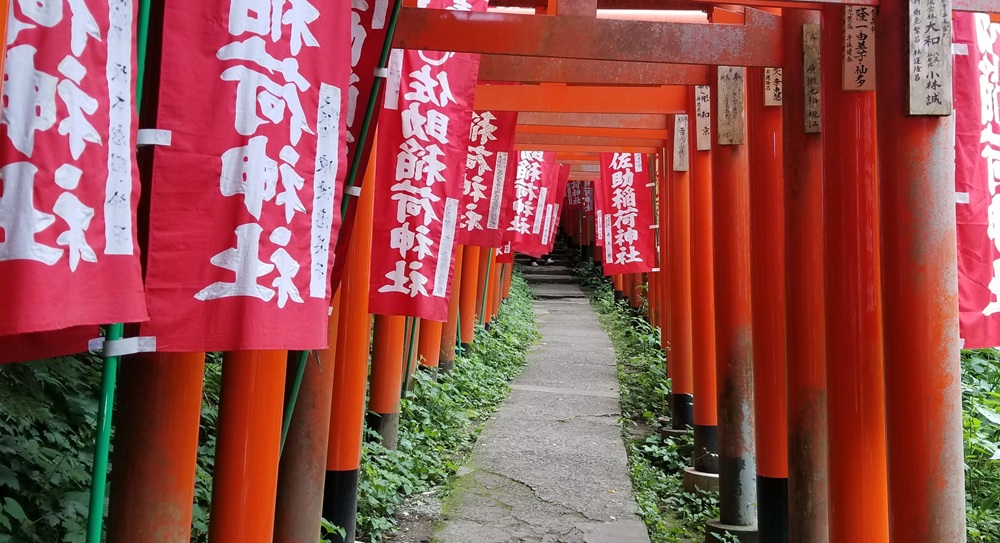
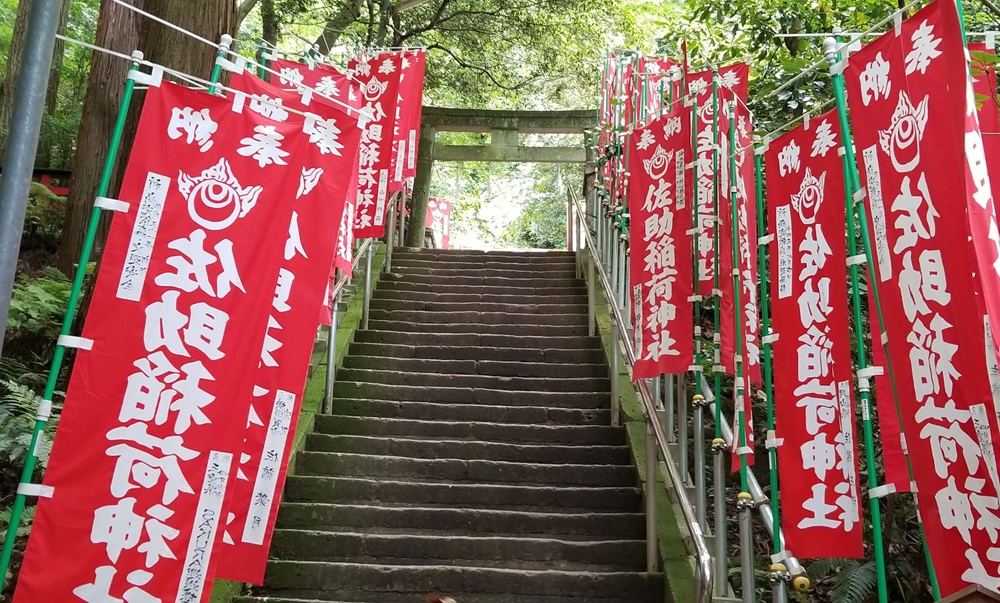
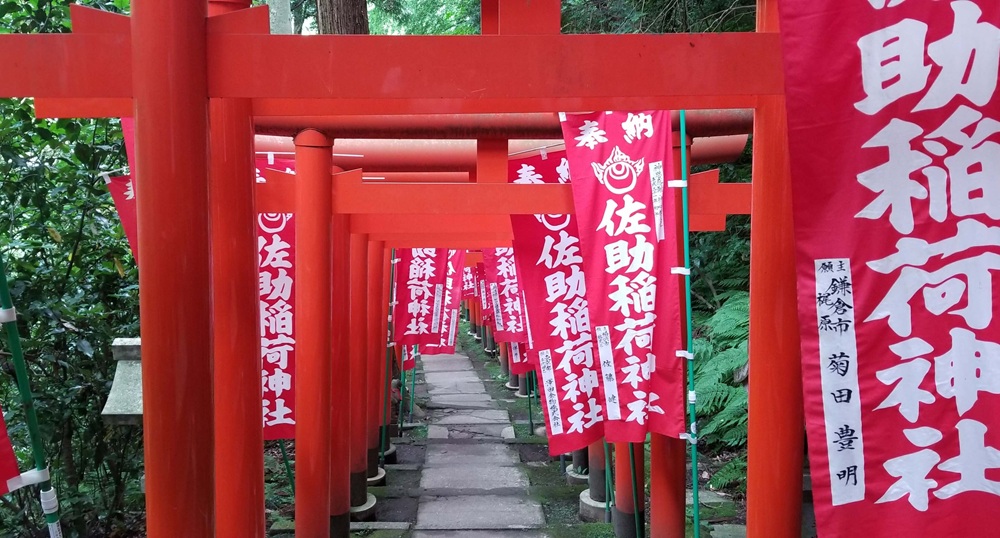
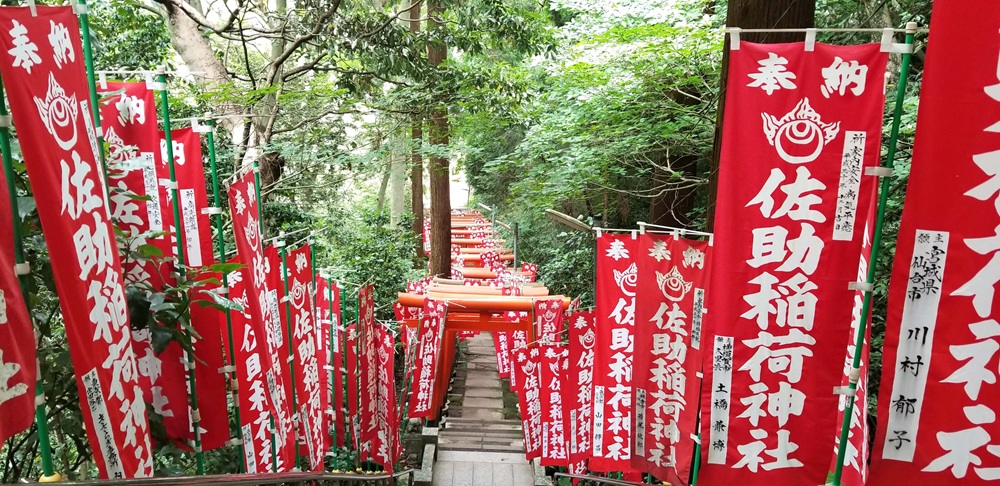
If you follow the large stone monument on your right as a landmark, you will see a row of red torii gates. There are said to be 49 of them in total, making for a spectacular sight.
There are many hiking trails in Kamakura.
If you would like to walk this trail, the official Kamakura City Tourist Association website does provide information on hiking courses, but currently the hiking course details are only available in Japanese.
I also highly recommend walking through Kamakura’s historic kiridoshi passes. If you’re interested, please check out my blog for more details!
👉 Walking Kamakura’s kiridoshi was an amazing and great experience
コメント